Friday, November 26, 2021

Notes on Recent Viewings

THE ELECTRICAL LIFE OF LOUIS WAIN (2021)

This Amazon Prime offering is an exquisite biopic of the British cat caricaturist of the early 1900s, starring Benedict Cumberbatch and THE CROWN's Claire Foy. Though its pacing is anything but frenetic, it captures something of Ken Russell in its approach to the material, which is charming but also winningly eccentric, and ultimately psychedelic and abstract - and quintessentially British. Russell's influence is tacitly acknowledged by the casting of Phoebe Nicholls, the child in WOMEN IN LOVE, who is cast all these years later as the Wain family mother. This may be the only new movie I've seen this year that I would call a masterpiece; it's sweet and cute, caustic and tragic, surreal and unabashedly romantic. I even liked the CGI work in it, and the old age makeups are perfectly done. Donna and I were also thrilled by a strange coincidence: the day we watched this, we mailed a copy of my new SECRET LIFE OF LOVE SONGS book to Nick Cave (who helped inspire it); I was also working on an H.G. Wells-related audio commentary at the time and, when Wells turns up as a character late in this story, he was played by - of all people - Nick Cave. (This was actually a double whammy, as we last saw him turn up unexpectedly in WINGS OF DESIRE on the day the first copies of my book arrived from the printer.) I appreciate and always take note of coincidences like this, as they make me feel I must be on the right track.


TAKING OFF (1971)

I find myself on a 1971 jag, trying to catch up on the 50-year-old films I've somehow missed seeing over the years, because they are almost always worthwhile - plus, they give me the feeling there's at least another 50 years to look forward to! This early film by Milos Forman, a generation gap story of sorts, was photographed by Miroslaw Ondricek, who subsequently shot Lindsay Anderson's O LUCKY MAN! (1973), and it's enlightening to see how they both tell their respective stories while cutting away to people performing live music. In the case of O LUCKY MAN!, Alan Price's songs represent a kind of Greek chorus to the story, while in this film the emphasis of the songs and storyline is on communication, the need and failure to communicate, to express oneself. I was also surprised to recognize an instrumental version of Mars Bonfire's "Faster Than the Speed of Life" playing in the luncheonette scene. It had previously been covered by Steppenwolf on their second album, so I guess this counts as Steppenwolf muzak!


LITTLE MURDERS (1971)

Alan Arkin's directorial debut was a first time viewing, courtesy of the Criterion Channel. I liked this one very much for the most part; it feels a bit overlong, and has a few gratingly self-indulgent scenes in the last half hour particularly (one featuring the director, though playing this part was probably helpful in terms of allowing him to direct), but there's a whole feature length chunk of it that's brilliantly written and played, smart and sardonic and very funny. Elliott Gould, Lou Jacobi, Donald Sutherland, Vincent Gardenia - all wonderful. As is Elizabeth Wilson, who has been turning up in a lot of my viewing this year - she was also a regular on EAST SIDE WEST SIDE episodes, which I've been watching. I've always enjoyed her as a comic actress so I've been impressed to see what she can do as a serious dramatic actress. I'm acquiring a funny sort of crush on her. She's perfect in this.


NIGHT AND THE CITY (1950)

Another Criterion Channel discovery. How on earth has this eluded me till now? A masterpiece, top to bottom, with a killer cast: Richard Widmark (at his very best), Gene Tierney (in a small but key role), the delectable Googie Withers, Herbert Lom (at his most villainous AND moving), Mike Mazurki, Hugh Marlowe (it felt like the first time I've ever seen him play a real human being), Francis L. Sullivan in a touching tragic role, and the incredible ex-wrestling champion Stanislaus Zsybyzko. Based on a 1936 novel by Gerald Kersh, the film is set in a highly expressionistic, near surrealistic postwar London, featuring a number of Dickensian characters and intrigues. I was under its spell from the very first shot and the spell was never broken. I want to check out Glenn Erickson's audio commentary (from 2004!) very soon, which is also on offer at Criterion.


DESIRE (1936)

This Frank Borzage film, produced by Ernst Lubitsch, is an utterly winning reunion of the two stars of 1930's MOROCCO, Gary Cooper and Marlene Dietrich. Cooper's a guiless American taking his first vacation abroad in Spain (he's read every book about Spain there is) and Dietrich is introduced as an accomplished jewel thief, a kind of female Fantômas (her actual backstory, which comes out later, is somewhat different to that) - the two of them perfectly aligned for the proverbial "cute meet." The story may be far-fetched but it's told with such humor, flair, and style, who cares? Inexhaustibly charming entertainment, and there is nary a shot in which Dietrich looks anything less than a goddess. A couple of times I couldn't help but laugh because her Travis Banton costumes were such outrageous "lounge about the villa" wear. The supporting cast includes a dark-haired William Frawley, a young and impeccable Akim Tamiroff, and Colonel Sebastian Moran himself, Alan Mobray. My favorite Borzage now. Available as a beautiful Blu-ray from Kino Lorber.


RED NOTICE (2021)

This exotic heist thriller from Netflix stars Dwayne Johnson, Gal Gadot, and Ryan Reynolds, whom I quickly wanted to gag. A $200,000,000 international production, at least as lavish as the latest Bond, but thin, jokey stuff patently made for 18-20 year olds who favor the kind of wit that involves trivial references you need to be at least 50 to understand, if not impressed or amused by. As often happens in today’s action movies, no one can fall from a high precipice without 10 other fast things happening on their way down. I hate that. There was a 30 minute stretch of excitement that was so monotonous we both fell asleep. The ending warns us they are thinking sequel.


DEVIL GODDESS (1955)

I finally completed a memory-refreshing viewing of my three-volume JUNGLE JIM COLLECTION from Australia's Umbrella Entertainment. For the last three films in the set, producer Sam Katzman chose not to renew his contract with King Features (which held the rights to the JUNGLE JIM comic strip) and had Johnny Weissmuller play a fantastic version of himself, living in the jungle and working as a guide for various scientists, archeologists, and n'er-do-wells. Sad to say, this last title in the series finds Johnny leading a compact expedition in search of a lost scientist, who is found living on a dormant volcano (obviously, it eventually wakes up) and misrepresenting himself to a native tribe as a lightning-throwing god to be worshipped. Though only 68 minutes long, the film is shamelessly constructed around recycled scenes and stock footage from at least five of the previous JUNGLE JIM movies, all of them made within recent memory given that the first film in the series was released in 1948!


(c) 2021 by Tim Lucas. All rights reserved.

Subscribe to Tim Lucas / Video WatchBlog by Email

If you enjoy Video WatchBlog, your kind support will help to ensure its continued frequency and broader reach of coverage.


Monday, November 22, 2021

Revisiting THE TIME TRAVELERS


Writer-director Ib Melchor’s THE TIME TRAVELERS (1964) is a former American International Pictures release that I first discovered on local commercial television some 50 years ago. It's the story of four workers (DOCTOR X's Preston Foster, Philip Carey, Merry Anders, Steve Franken) in a scientific installation who are studying time travel and inadvertently open a window that takes them "through the looking glass" into the far-flung year of 2071, when the few survivors of an atomic catastrophe (led by ATTACK OF THE PUPPET PEOPLE's John Hoyt) war with a splinter society of mutants while erecting a starship to escape their oppression and the slow death of Mother Earth. 

I revisited the film a couple of nights ago, courtesy of Kino Lorber's recent Blu-ray release. Going back to it was a joy, refreshing my appreciation of its appealing personality and the sense of wonder it achieves on such a small budget. Just the opening shot - a slow zoom into a color slide of the galaxy - is surprisingly powerful on a big screen, especially when wedded with Richard LaSalle’s literally awe-inspiring music - I assume, a library recording.


The movie's real masterstroke of execution is that, with the exception of a few opticals, the bulk of the special effects were done either live on set (in the manner of magicians’ illusions) or in-camera, and some - like the removal and replacement of a living android’s head, filmed in a single sustained shot - impress no matter how many times you rewind and replay them. 


Each time I see it, I’m impressed that Melchior, while crafting an essentially wholesome work, found a means of remarking on what might become of mating habits and sexual interplay in a future time of duress. I've always particularly loved the scene where time seems to stand enchantingly still: Steve Franken's first date with a girl from the android assembly line, who serenades him with a "Lumichord," a kind of luminous abstract keyboard instrument that emits a glittery, otherworldly, romantic instrumental that is nearly the equal of “Telstar.” 
Aside from a few trailers, there are no extras on the disc, but it’s well worth having. It always entertains, and the new 2K restoration is lovely - and I also believe the mind-blowing finale may have inspired Stanley Kubrick’s approach to his Stargate sequence.

Melchior was the heart and soul of 1960s science fantasy. He also wrote and directed THE ANGRY RED PLANET, in addition to scripting Byron Haskin's ROBINSON CRUSOE ON MARS and Mario Bava's PLANET OF THE VAMPIRES (as well as REPTILICUS and JOURNEY TO THE SEVENTH PLANET, though these failed to take full advantage of his talents). These works are very much a bridge between 1950s pulp science fiction and what science fiction would become in the immediate wake of 2001, before STAR WARS hijacked the genre for decades to follow. THE TIME TRAVELERS may just be the best and purest distillation of his many talents.

(c) 2021 by Tim Lucas. All rights reserved.


Subscribe to Tim Lucas / Video WatchBlog by Email

If you enjoy Video WatchBlog, your kind support will help to ensure its continued frequency and broader reach of coverage.


Thursday, November 04, 2021

Severin Films' MIDNIGHT reviewed


MIDNIGHT

aka BACKWOODS MASSACRE

1980/82, 93m 56s

Severin Films BD / Region ABC/CC

Written and directed by the co-author of NIGHT OF THE LIVING DEAD, John Russo's MIDNIGHT was one of the last films I remember seeing at a drive-in, when drive-ins could still be trusted to present real, honest-to-goodness drive-in movies. (Unlike today, when most of the straggling survivors run the same multi-million dollar blockbusters that are playing indoors elsewhere.) I remember being seduced by Independent-International's radio campaign, which was not quite Brother Theodore but approximated that same wavelength: "MIIIIIIIIDNIGHT! When the DEAD drink the BLOOD of the LIVING!" intoned a raspy voice. Deal me in.

As signalled by Russo's proprietary credit, MIDNIGHT is an example of what George A. Romero's team could conjure up with Romero himself off the playing field. Based on a "best-selling" novel by Russo (which I suppose means it's the best-selling of his many novels), MIDNIGHT (whose working title was THE CONGREGATION) is the story of Nancy, a teenage girl who runs away from home to escape the overbearing sexual advances of her patrol cop step-father, hitchhikes a lift to Florida with two guys who are stealing food from convenience stores along the way, and ends up running afoul of a family of Satan worshippers trying to revive their dead mother with sacrificial blood while unwittingly camping on their woodsy property. 

For all I know, this out-of-the-frying-pan-into-the-fire story may be a real page-turner, but the film Russo made from it rolled out slowly. He was initially approached by an investor who offered him $35,000 toward a production; he then approached Samuel M. Sherman of Independent-International who offered him that same amount (as well as free 35mm film stock, the free use of an Arriflex camera, and the services of actor Lawrence Tierney) in exchange for the US distribution rights. 


The film stock tended to arrive three cans at a time, and irregularly, and somehow Russo - with a little help from his friends, including special makeup effects artist Tom Savini and MARTIN star John Amplas - managed to keep things moving forward over a leisurely pace. You've heard of films made in eight weeks? Six weeks? Four weeks? Two? Over a weekend? Six months later, Russo had his rough cut. According to the stories gathered in the interesting extras of Severin's new Blu-ray, Russo sent his cut to Sherman, who was reportedly pleased with the result... but not entirely satisfied. He suggested an alternate ending bringing Tierney back into the story, which Russo filmed to order, and the film's completion coincided with 1980's glut of serial killer gore pictures. Feeling that "it's time will come," Sherman shelved MIDNIGHT till the summer of 1982, by which time it was pretty obvious that he had waited too long. By then, drive-ins were starting to die and splatter movies (of which this is a fairly dry example) were starting be co-opted by major studios as their franchise value began to be recognized. Even changing the film's title to the more-to-the-point BACKWOODS MASSACRE proved ineffectual. In short, the unlucky picture never had too much exposure.


In all honesty, MIDNIGHT is nothing to get too excited about. It doesn't really add anything to what filmmakers like Tobe Hooper and Wes Craven had brought to the genre in far scarier form in the 1970s, though Russo did have certain ambitions for the project. It was his intention to depict a world in which even the good people were compromised; where he could ironically contrast the evil family's Satanic beliefs with Nancy's reawakened-under-stress Catholic beliefs, both of them equally misguided in his view; however, in the script that developed, these are no more than shown in parallel without achieving a true synthesis of contrast and ironical comment. Russo's intentions are most effectively expressed in the film's score, which consists in large part of what sounds like Christian rock ballad instrumentation wedded to dark, Satanic lyrics. 

According to Russo's 22m interview in this set, the production was beset by trouble with the film stock, which was somehow inadvertently (and repeatedly) exposed to light before use, rendering most of his best takes (and even some entire scenes) unusable - which they didn't know until they screened them, and at which point the opportunity to reshoot was gone. The cinematography is no more than serviceable and offers very little in terms of atmosphere. Dead characters are repeatedly misframed so that their breathing torsos remain in full view. The primary performances are mostly okay, with Melanie Verlin (our resilient Final Girl) and Amplas standing out, while the supporting roles are mostly amateurish. As with NIGHT OF THE LIVING DEAD, there are some African-American actors in the mix, allowing the film to shuffle in some mild editorializing about lingering racism in small town America, but it makes so little impact on the whole that it seems almost obligatory rather than a hard confirmation of the picture's world view. Curiously for a 1980s R-rated film, there is no nudity and only the mildest of cursing, though in one climactic scene Verlin can be seen silently mouthing the F word and the S word while repeatedly failing to light a match to set her gleeful pursuer ablaze. Independent-International actually added some elegance to the film in post-production with the title sequence design of their trusty expert, Bob Le Bar. Ultimately, this is one of those movies that are probably less entertaining as films than they are useful and instructive reference for people with an interest in regional, grass-roots filmmaking, which makes its supplementary content all the more valuable.


Michael Felsher's Red Shirt Productions brings to the set a fine series of interviews with Russo, Sherman, Amplas, and Savini, most of whom mention that the film was largely brought together by "Point Parkers" - the local nickname for faculty, students, and alumni of Pittsburgh's Point Park University. Savini actually recalls little about the production, as his services were keeping him especially busy during this period, but he itemizes the props he brought over from previous jobs, like the trick machete used in DAWN OF THE DEAD and the mask used for the mother's dead body in MANIAC, which is recycled here for much the same purpose. Also included are isolated score selections composed by Mike Massei (who comments on them between cues), and an alternate title card and radio spot for BACKWOODS MASSACRE. Alas, the MIDNIGHT radio spot I remember so fondly is not included.

The region-free disc presents the film in its OAR of 1.66:1, with audio in optional 5.1 surround or 2.0 stereo, and it looks infinitely better, razor-sharp with well-defined color, than the print I remember seeing at the drive-in back in the day. Alas, that rough-and-ready presentation probably did this punch-pulling film some favors, as the clarity of Blu-ray makes it more of a through-the-window look back at the younger days of some ambitious Point Parkers, using their off-time to have a little fun while rolling the dice at the Big Time.  

For what it's worth, though MIDNIGHT wasn't fated to become any kind of a classic, we're told that it eventually earned back its money and then some.  


(c) 2021 by Tim Lucas. All rights reserved.

Subscribe to Tim Lucas / Video WatchBlog by Email

If you enjoy Video WatchBlog, your kind support will help to ensure its continued frequency and broader reach of coverage.


Wednesday, November 03, 2021

Severin's AN ANGEL FOR SATAN reviewed


AN ANGEL FOR SATAN
 
Un Angelo di Satana, 1966
92m 20s
Severin Films 

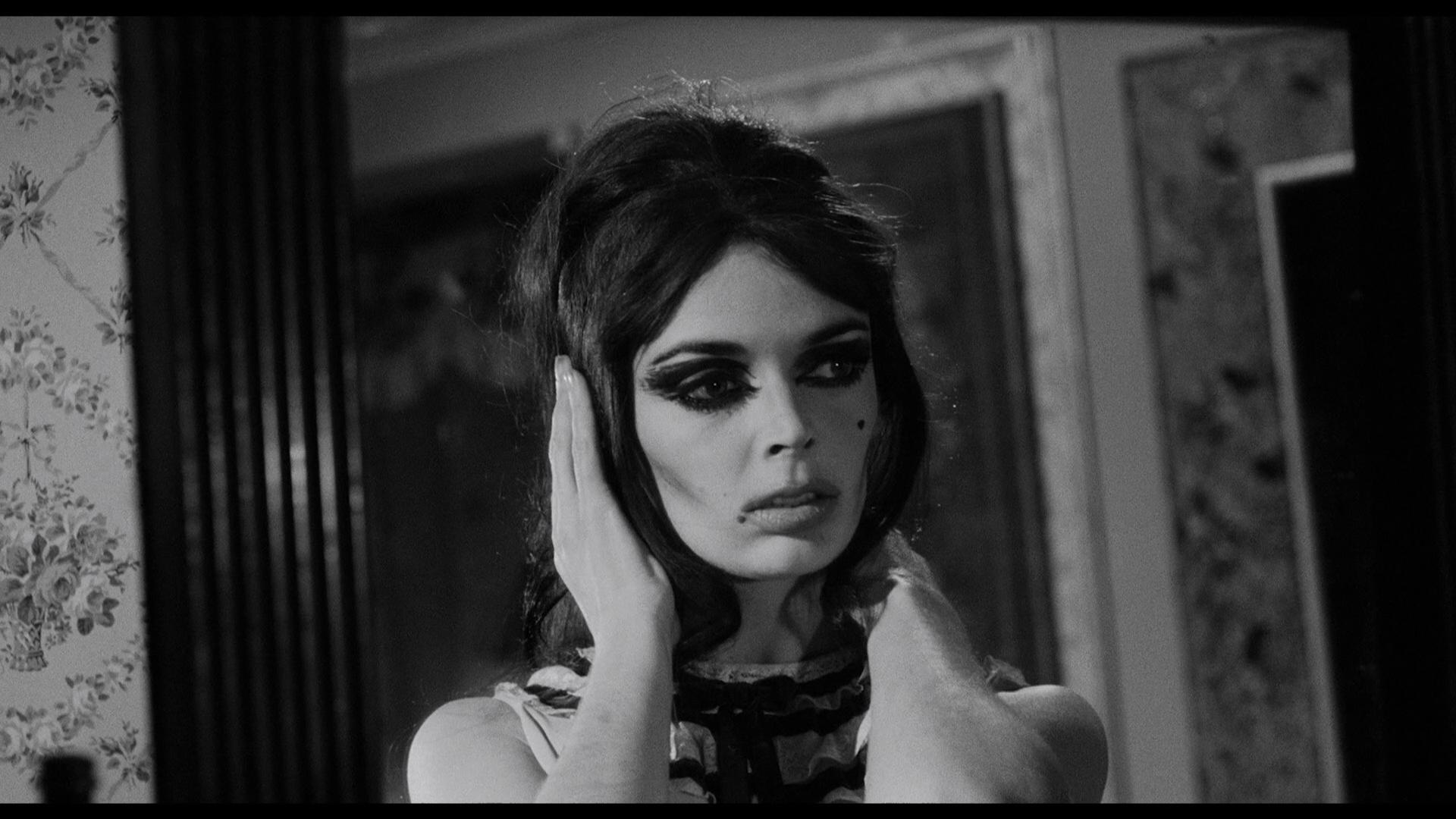
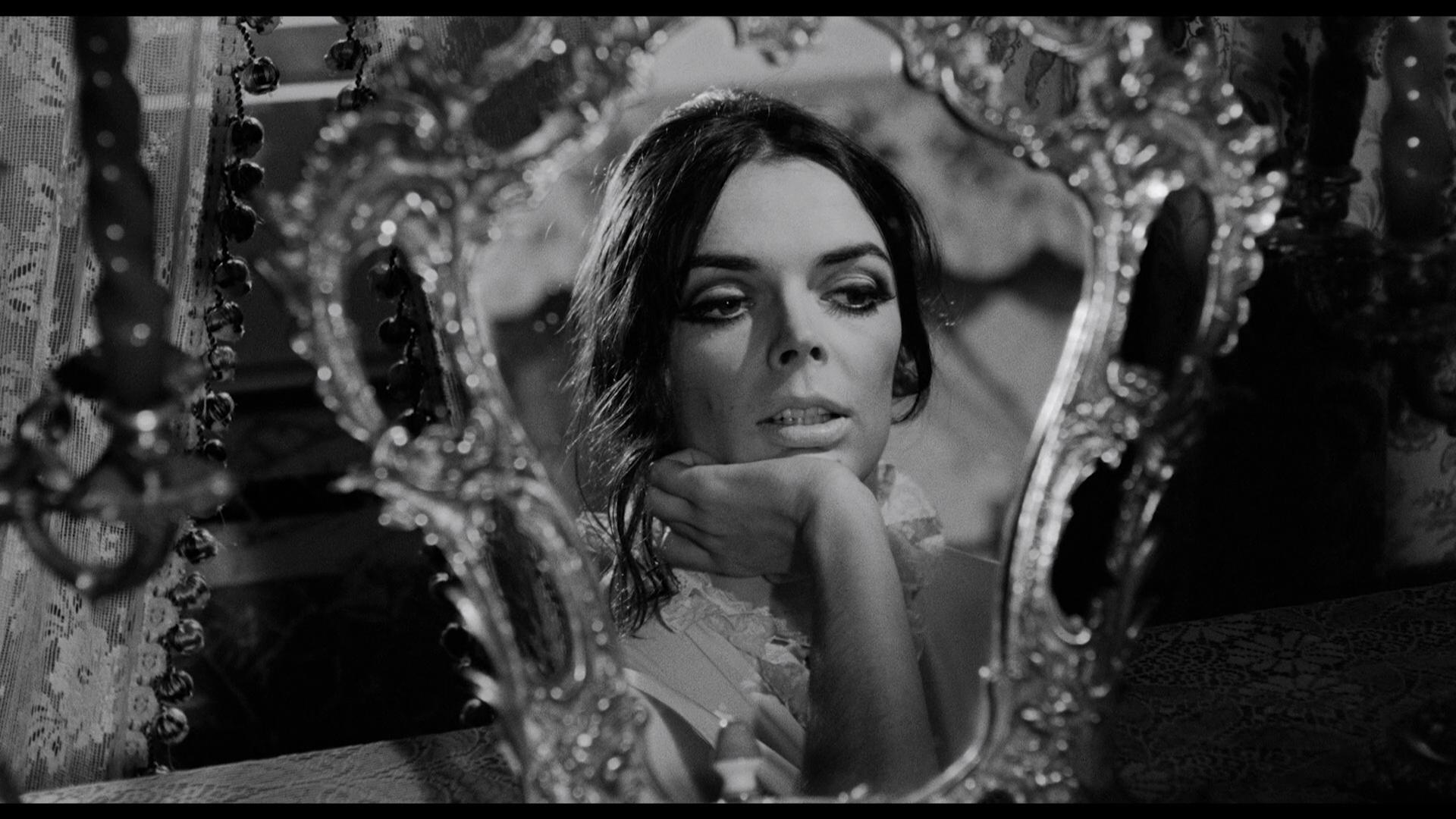
Barbara Steele's last Italian Gothic is one of her best and long the least accessible. As her films often are, it's a rumination on her uncanny beauty, but this time it's a love/hate rumination as well as one that asks us to consider things from her side, as the bearer of that beauty. While it certainly takes the viewer to some horrific extremes of human nature and frailty, it seems less a horror film than a romantic tragedy, streaked not only with tears but with aspects of witchery, folk superstition, and hypnosis. The direction is by Camillo Mastrocinque (TERROR IN THE CRYPT aka CRYPT OF THE VAMPIRE) and the storyline - which involves the salvaging and restoration of a life-sized female statue said to be cursed, which coincides with the homecoming of the original model's twin descendant (Steele) - is indebted to Prosper Merimée's 1835 fantasy VENUS D'ILLE, which in 1980 would become the source of Mario Bava's final film, completing the pas de deux they forged in their separate but metaphysically joined careers. Ultimately, the film cops out with a practical explanation of events, which is then given another last-minute, more risible surprise twist, but the best of the film stands out in memory. The cast also includes Anthony Steffans (as the handsome sculptor/restorationist, an archetype that would also appear in Avati's THE HOUSE WITH LAUGHING WINDOWS), the husband-and-wife team of Claudio Gori and Marina Berti, as well as TERROR IN THE CRYPT's Ursula Davis in a touching performance, and the villa exteriors are familiar from Bava's BLOOD AND BLACK LACE. Soundtrack enthusiasts will be drawn immediately to the tender, heart-wrenching score by Francesco de Masi, one of the production's outstanding elements.


Though not an explicit film, AN ANGEL FOR SATAN pivots on the idea of how physical beauty, romantic longing, and sexual hunger can drive a person mad. Steele is once again cast in a divided role, sometimes the innocent heiress Harriet Montebruno, and sometimes seemingly possessed by her narcissistic ancestor Belinda, whose beauty is like an altar others must die upon. While filmed with the utmost taste and gentility, the story encompasses jealousy, narcissism, schizophrenia, sexual obsession and manipulation, sado-masochism, lesbianism, and rape. Steele models a unusually sheer white nightgown in one scene, rubbing her hands repeatedly over her breasts, so this isn't something American International could have picked up for the kiddie trade. The picture's adult nature is surely what prevented it from ever gaining a US release, which has resulted in its relative obscurity. It did have a brief UK release, with an X rating, after which the much-sought English language version then disappeared off the face of the earth... till now. 


Severin's handsome Region A Blu-ray release marks its first official home video release in either country and the the first time the English dub has been accessible in more than half a century. This is a major recovery, for which Severin Films is especially to be thanked. It's also a well-done track with a cast of familiar voices (Steele is dubbed by Carolyn de Fonseca), which - for those of us who first experienced Italian Gothics at weekend matinees or TV spook shows - restores the film to its proper niche with a warmly nostalgic charge. The original Italian dub is also included with optional English subtitles.

The extras include an amusing audio commentary by Steele, moderated by David Del Valle and David Gregory, which naturally touches on many other subjects besides the movie at hand; a thoughtful and probing commentary by Kat Ellinger; a visit with cast member Vassili Karas, who tells us how he hates horror films; and a 9m short adaptation of VENUS IN FURS starring Steele and directed by noted Surrealist and film historian Ado Kyrou. The latter can be viewed with or without Steele's explanation of how this languid day shoot came about. It's basically formless, an overlong fashion shoot with the star rolling around in furs like so much catnip as passages from Sacher-Masoch are intoned. She calls it "ridiculous" and bemoans that she didn't take the job more seriously - but it's not like she was given anything of substance to do. Nevertheless, as a heretofore elusive bauble of Steeleiana, it is not without value.


(c) 2021 by Tim Lucas. All rights reserved.

Subscribe to Tim Lucas / Video WatchBlog by Email

If you enjoy Video WatchBlog, your kind support will help to ensure its continued frequency and broader reach of coverage.


Thursday, October 14, 2021

A Word to the Wise Wallace Collector


Volumes 9 and 10 of the Edgar Wallace krimis apparently came out last March on Blu-ray in 4K restorations, but I'm only finding out about them now. I received my copies today and celebrated this evening by watching Alfred Vohrer's DER MANN MIT DEM GLASAUGE ("The Man with the Glass Eye," 1968), his final film and one of his best. I never realized this till tonight, so it may be the doing of the restoration, but it has one of the most dazzling main titles sequences I've ever seen. Its visual storytelling, the cinematography by Karl Löb, evokes the work Mario Bava was making at this time while also paying homage to the color lighting and the sardonic exposé of life behind the glamor and entertainment industries in Bava's BLOOD AND BLACK LACE (1964). Just as Bava was unique to Italy, there was no one else quite like Vohrer in German cinema, so wonderfully mad and audacious. I would have to say he was a more kinetic filmmaker than Bava, that his main goal was to amuse, thrill, and dazzle his audiences. I believe he had authentic genius.

The films in these latest sets are:

EDGAR WALLACE VOLUME 9:

Die Tür mit den 7 Schlössern / THE DOOR WITH SEVEN LOCKS

Der Mann mit dem Glasauge / THE MAN WITH THE GLASS EYE

Die Tote aus der Themse / THE CORPSE FROM THE THAMES

ALL titles include optional English audio and subtitles.


EDGAR WALLACE VOLUME 10:

Das Verrätertor / TRAITOR'S GATE

Der Gorilla von Soho / THE GORILLA GANG 

Das Gesicht im Dunkeln / DOUBLE FACE

DAR VERRÄTERTOR is a distinct German version of the film Freddie Francis also directed in an English version known as TRAITOR'S GATE. It does NOT feature English audio or subtitles, perhaps for contractual reasons to do with the English version.

I am not yet certain whether DOUBLE FACE is the same cut that Arrow Video released awhile back with my audio commentary, but I suspect the German version will be the same version as previously released in German Wallace sets. 

Click on the blue titles to link to the Amazon.de sales pages.


(c) 2021 by Tim Lucas. All rights reserved.

Subscribe to Tim Lucas / Video WatchBlog by Email

If you enjoy Video WatchBlog, your kind support will help to ensure its continued frequency and broader reach of coverage.


Tuesday, October 12, 2021

THE SECRET OF THE BLUE ROOM (1933) Reviewed


THE SECRET OF THE BLUE ROOM (1933, 65m 36s; Kino Lorber):

A remake of Erich Engles' 1932 "locked room" mystery GEHEIMNIS DES BLAUEN ZIMMERS, THE SECRET OF THE BLUE ROOM has long been a subject of fascination for the most obsessive of Universal horror fans. Though not really a horror film, it does aim to spook and hails from the studio's initial embrace of horror, having been produced smack dab between Karl Freund's THE MUMMY (1932) and James Whale's THE INVISIBLE MAN (1933) on sets recycled from Whale's THE OLD DARK HOUSE (1932) and FRANKENSTEIN (1931). It's Universal's only "old dark house" thriller to open and close with the company's distinctive "Swan Lake" theme, conducted by Heinz Letton. It also stars two of the company's great genre stars, Lionel Atwill (in his first Universal film) and Gloria Stuart, heading a nearly nonpareil supporting cast that includes Paul Lukas, Edward Arnold, Onslow Stevens, Robert Barrat, and Elizabeth Patterson. Further sealing its horror status, it was also among the titles first released to television as part of Universal's original "Shock Theater" package in October 1957, so it happened to be seen and memorized by a select number of "Baby Boomer" viewers before it completely vanished from view for many years. It was only a few years ago that the film resurfaced after decades of neglect on DVD-R as part of Universal's Vault Series, and now Kino Lorber has licensed it for Blu-ray in what appears to be a spectacular looking restoration, though it's not being pitched as one.


At Castle Helldorf (evidently somewhere in Europe), it's the 21st birthday of Irene von Helldorf (Stuart, in a procession of frankly absurd Vera West costumes), and she's celebrating in the company of her father Robert von Helldorf (Atwill) and three remarkably chummy suitors: Naval Captain Walter Brink (Lukas), reporter Frank Faber (Stevens), and the youngest, the rather dashing Tommy Brandt (William Janney). After a fine dinner, they assemble around a table for drinks and conversation, which lead to Robert being pressured by Frank into telling them the true story behind the local rumors about the castle's fabled Blue Room. He explains that, twenty years earlier, when Irene was still an infant, three men were sequentially murdered in that room in a case that was never solved. No murderer was ever seen exiting the room's only door. Tommy, who has already proposed to a not-very-receptive Irene, determines to prove himself the equal of Walter's military bravery and Frank's journalistic enterprise by spending the night in the murder room. As you can imagine, this doesn't go well... and it's just the beginning of a renewal of the Helldorf family curse. In time, Commissioner Forster (Arnold) is summoned to investigate.


Subsequently remade by Universal as John Rawlins' THE MISSING GUEST (1938) and Leslie Goodwins' MURDER IN THE BLUE ROOM (1944), THE SECRET OF THE BLUE ROOM is very much a B-picture, albeit with better patrimony than most. It was capably directed by Kurt Neumann (whose later work would include KRONOS and the original version of THE FLY) at the Wellesian age of only 25. Though the final act thankfully slips us a surprise, much of this short feature is either blatantly predictable or challenging to logic, but the viewer - at least this viewer - is held close by the quality cast and the comforting "house style" atmosphere conjured by Stanley Fleischer's moody art direction and the cinematography of Charles J. Stumar (THE MUMMY). The closing shot, which suggests a more theatrical experience, is remarkably solemn and effective.


The disc's principal extra is an audio commentary by filmmaker and film historian Michael Schlesinger. This is not the sort of film that lends itself ideally to commentary, because it's straightforward and neither very deep nor original. That said, Mike - who's an old friend of mine - gives it his best shot. There are a couple of brief silences, there are jokes aplenty (some at the film's expense, but with the love), and there are vamps, but it's apparent at all times that this film is an old and dear friend to him. He offers up a wealth of knowledge about the cast and crew, the circumstances of production, and even the history of some of the furniture used in the picture - noting that a matching set of antique chairs and a love seat went on to appear in Larry Blamire's DARK AND STORMY NIGHT (2009), a film he co-produced. He also views the film with a professional eye, pointing out some fumbles probably left in out of haste (it was reportedly shot in just six days) and how some scenes are hurt by the film's paucity of music, and pausing here and there to appreciate the placement of props and set dressings that add to the photography's sense of depth. It's a friendly, attentive, and affectionate commentary, which is pretty much what the movie calls for. 

The Region A disc is presented at 1.37:1 with optional English subtitles only. Also included as extras are a few uncommon Universal-related trailers (including THE SPIDER WOMAN STRIKES BACK and THE MAD DOCTOR), which for some reason play without sound.

Available now for pre-order, THE SECRET OF THE BLUE ROOM officially streets on November 2.  


(c) 2021 by Tim Lucas. All rights reserved.

Subscribe to Tim Lucas / Video WatchBlog by Email

If you enjoy Video WatchBlog, your kind support will help to ensure its continued frequency and broader reach of coverage.


Saturday, October 09, 2021

50 Years Ago: Meeting Jorma and Jack

Today marks the 50th Anniversary of a very special occasion in my life. 

It was on October 9, 1971 - also a Saturday - when my friend Mike Hennel and I (both 15) made plans to go downtown by bus for a very special event. Hot Tuna were in town to play a concert at Cincinnati's Taft Theater. It was the first concert either of us had gone to without our mothers driving us to the venue. We were now fully grown, bus-taking men, and we were so green that we actually bought our tickets at the door.

I have to precede this memoir by noting that, when I first started listening to Jefferson Airplane in early 1970, and then when I saw them perform live music on pre-PBS NET later that year, my whole attitude to music was somehow galvanized. I literally went crazy about them, buying all their albums, listening to them every day, and being led to the siren call of the bootleg recordings in the basement room at Kidd's Bookstore. It was in that same basement in 1972 that I discovered CAN's SOUNDTRACKS album as an import in the bin next to Jefferson Airplane's UP AGAINST THE WALL, which was a bootleg of those television appearances that so electrified me, and this somehow exemplifies how the Airplane had made me much more open to different, more challenging music. So when Airplane guitarist Jorma Kaukonen and bassist Jack Casady's spin-off group came to town, I had to see them. And I also knew, at the ridiculously young age of 15, that I somehow had to get backstage to meet them and have a moment. 

Prior to the show, after some initial haggling with a stage manager who got progressively more drunk as the evening passed, Mike and I managed to get backstage. As Mike was relieving himself, not expecting me to have any luck, I happened to see violinist Papa John Creach (who I recognized from ROLLING STONE) coming out of a room that music was softly coming from.

I said, "Papa John, is it OK if I go in?"

He kept on trucking and didn't even look back as he said, "Sho, baby!"

So I walked up and gently opened the door, expecting something other than their actual dressing room to be there. It was a two-roomed area that smelled of incense. Standing there, right inside the door, were the other three quarters of the band (Jorma, Jack, and drummer Sammy Piazza) warming up for the show. 

I was right there with them - and they were performing! Just for me, but without knowing it.

Jorma's back was turned to me. I didn't want to interrupt so I waited for a moment when I could announce myself and just listened quietly. Jack was the first to take notice of me and he signalled Jorma with his eyebrows, as if to say: "We have a visitor."

Suddenly the song cut off, dead silent, and Jorma turned to face me. Jorma is still a formidable man today but he looked like a very tough cat in 1971. Can you imagine my terror?

I've heard well over 150 hours of live Airplane and Tuna shows in the intervening years and I have known Jack and Jorma to STOP playing a song midway through exactly twice. The only other time was at ALTAMONT.

My stomach dropped as I apologized for the intrusion. He immediately put me at my ease, because I felt that I'd pulled the plug on something sacred. I introduced myself and asked if it would be possible to have an interview at some point. Jorma had every right to be annoyed but he was cool. Gently guiding me back through the door, he said "Maybe after the show." 

I walked in a stunned daze back out to the outer area and found Mike looking for me. I told him what happened, and he thought I was kidding him. Jorma had said "Maybe." I was kind of skeptical that we'd be able to get backstage a second time, but I knew I had to try. 

This is pretty much the way they looked that night, but Jack was stage right.

To this day, it's still the single loudest concert I've ever attended. I think the opening act, Eli Radish, may have sterilized me for life with the lightning shafts they sent through my nervous system. When Jorma came on and played his first notes, his volume was literally stinging and stark - until Jack's bass lumbered in with a surprisingly gargantuan depth and warmth. They were so loud, we literally had to change seats and proceeded to look for a pair with better cushioning. At this time, Hot Tuna had a single live acoustic album out, and I think the second one, a live electric record, was maybe just out - but the concert was the first time I'd heard their electric configuration. Just like the Airplane had led me to seek out other psychedelic bands, even jazz artists, Hot Tuna sent me off in search of records by blues artists from the Reverend Gary Davis to R. Crumb and His Keep-On-Truckin' Orchestra. Will Scarlett, who played harmonica on their first two albums, was not present, which provoked someone in the audience to ask where he was. "In Mill Valley," Jorma said.

At some point, Jorma announced that this next number would have to be their last because the hall had to close by 10:00 for some reason. The audience grumbled, then he stepped back up to the mic and added, in a faked shock attitude, "Did I hear somebody say 'Bullshit?'" - and everyone in the house shouted it back at the stage. They closed with a long performance of an instrumental that had not been released yet, but which would eventually become "Eat Starch Mom" on the Airplane's last studio album, LONG JOHN SILVER in 1972. When they started playing it, Mike and I made our move. 

The stage manager was pretty ripped by this time, and he quite properly didn't take my plea of press credentials very seriously. By this time, I was already a film and music writer for my school paper, but I wanted to write about this adventure for a friend's science fiction fanzine. I think he finally got tired of haggling with me, or maybe just thirsty, and he let me pass. We were able to stand in the stage wings, watching the performance from up close for the last five or six minutes of the performance.

When Jorma walked offstage that night, wearing a Felix the Cat T-shirt, he walked right toward me with a really happy face and a firm handshake. I thought he might need to be reminded of our earlier brief encounter, but he said, "C'mon up 'n' we'll rap awhile."

So we followed him upstairs. He was wearing those black leather pants with the diamond patterns down the sides, and it occurred to me that he was the skinniest cat I'd ever seen in my life. Inside the dressing room, Jack disappeared into the next room with a friend, leaving Jorma to handle the press duties. He asked if this was for a school paper or something, and I told him my intentions. I basically just wanted to make contact, ask some basic questions, and get a better sense of what this spin-off thing was about. As we talked about the Woodstock movie, the suspenseful state of Jefferson Airplane, the pleasure of live performance, and how the band were preparing to go into the studio to record their first non-live album, Jorma apologized - saying that they had to be out of there by a certain time, "but we've still got some time" - and started undressing while fielding questions, stripping down to his skivvies and getting into a pair of jeans and a different T-shirt. 

He was incredibly friendly, curious, and giving; I've never forgotten how kind he was to me, in giving me that time. I just wish, in retrospect, I'd had the benefit of some more years, more listening, more preparation, so that I could have asked some of the questions that I've lived with in the half century since. And I wish I'd had the courtesy to ask Sammy a thing or two. But, as my questions began to turn trivial, I realized we should just say thanks and get on with their evening. I don't know where Papa John was through all this.

Before parting company, I had to step into the next room to have some sort of moment with Jack. Jack has always been especially important to me because my late father had been a bass player; it was one of the few things I knew about him, and the purpose of the bass was always mysterious to me because I was never able to hear it on my transistor radio or the cheap record players I grew up with. But when I first saw Jack on television, I heard and understood bass for the first time, what it was, what role it played, and how far it could reach. Jack is much more than a bass player. He's a storyteller. When I first saw him after stepping into that little room, he was standing in a corner with a lady friend. I remember being surprised that he was shorter than me; Jorma was too, but he had an enormous aura (that's the only way to explain it) that made up for it. Anyway, I walked over to Jack with an outstretched hand - just as he was starting to put on what may have been the same sweater he wears on the cover of BLESS ITS POINTED LITTLE HEAD. 

"Hold on a minute," he said. With deliberate suspense, his hand shot slowly through the large, bell-like sleeve and then into mine. I remember that his hand felt really soft, not calloused as I expected from a bare-handed player. "Great show," I told him. He smiled at his lady friend in a self-satisfied way, then at me, and said "Thanks." Short and simple - nothing as profound as the many great conversations we've had as musician and listener in the 50 years since - but those few moments covered a lot of bases (no pun intended). Surprise. Gratitude. Suspense. Humor. I couldn't have written a better brief encounter, and it's been a mental snapshot I've looked back on a lot, with some incredulity that I was just a kid and somehow made that moment happen.

Looking back at this now, as (I must confess) I often do, it means a lot to me that Jorma and Jack were still active members of Jefferson Airplane when we met, that they were still the guys they are in the television shows that were burned into my brain, that they were still actively making the music that I continue to have this inexplicably singular and committed relationship with all these years later. In 1974, I would meet Paul Kantner and Grace Slick backstage at the RKO Albee Theater, just down the street from the Taft, on their first Jefferson Starship tour, and though I still enjoyed the music they made, the specific complex chord the Airplane struck as a unique musical personality was no longer there.

Five months after that remarkable evening, my friend Mike - who loved their music too - died at the age of fifteen. Sometimes, when I think of his early death, I'm reminded that he was the only other witness to this uncanny occasion, the only proof I had that it actually happened. We didn't take a camera; hell, we didn't even ask for autographs, and we were both too stunned and wrapped up in our own replays of the evening to talk much on the bus ride home. 

Obviously, I've never forgotten. 

I've never crossed paths with Jorma and Jack since, even though Jorma and I live in the same state. He owns the Fur Peace Ranch in Meigs County, Ohio, where he and Jack teach guitar/bass instruction and perform acoustic and electric sets on occasion, which always sell out very quickly. On February 13, 1993, I got to see and hear Jack and Papa John with Paul Kantner and original Jefferson Airplane vocalist Signe Anderson in a Jefferson Starship Acoustic Explorer configuration. I didn't get backstage that night, but when Papa John walked onstage playing "Over the Rainbow" (one of Donna's favorite songs), everyone stood to applaud. I was standing just six chairs from the stage and I know that he looked directly into my eyes, sustaining a frenzied note, until they welled. Hot Tuna are scheduled to return to Cincinnati in December to perform at the Ludlow Garage, but the ticket prices are way out of my range.

Today, I look back on the night of that concert and the fact that I took it on myself to meet these guys as the first truly quantum step I ever took outside my own world, my own teenage monotony. Thanks to that occasion, I learned early on that dreams exist to be realized. As the song goes, Won't You Try?

Hands down, the best $4.50 I ever spent.  

(c) 2021 by Tim Lucas. All rights reserved.

Subscribe to Tim Lucas / Video WatchBlog by Email

If you enjoy Video WatchBlog, your kind support will help to ensure its continued frequency and broader reach of coverage.