Monday, December 23, 2019

My 13 Favorite Fantastic Blu-rays of 2019


1. ULTRA Q (Mill Creek Entertainment)
The forerunner of ULTRAMAN and its many spin-offs, this complete set of 28 half-hour episodes is not entirely what one might expect from its legacy. Some episodes are indeed about new Tsubaraya monsters (and some thinly disguised old ones) arising to crush cities underfoot, but its real basis is THE TWILIGHT ZONE; there are also unsettling stories about existential situations, haunted houses, science fiction, and childhood imagination - and its all shot in gorgeous 35mm black-and-white, giving this most satisfying package the flavor of a self-contained Japanese new wave fantastique festival. Mill Creek has also issued similar sets collecting the spin-off series ULTRAMAN, ULTRA SEVEN, ULTRAMAN GEED and ULTRAMAN ORB.


2. LAST YEAR AT MARIENBAD (Kino Lorber)
One of my favorite movies, given a breathtaking 4K Studio Canal presentation and couched in some of the year's best supplementary features, including a dazzling, enraptured, in-depth interview with assistant director Volker Schlöndorff, actual 8mm home movies documenting the behind-the-scenes reality of the production, a fascinating visual essay by James Quandt, and a booklet essay by K. Austin Collins. I must also mention that it contains a new audio commentary by me; I gave it my all, and it's one of the more than 100 I've done of which I'm most proud.


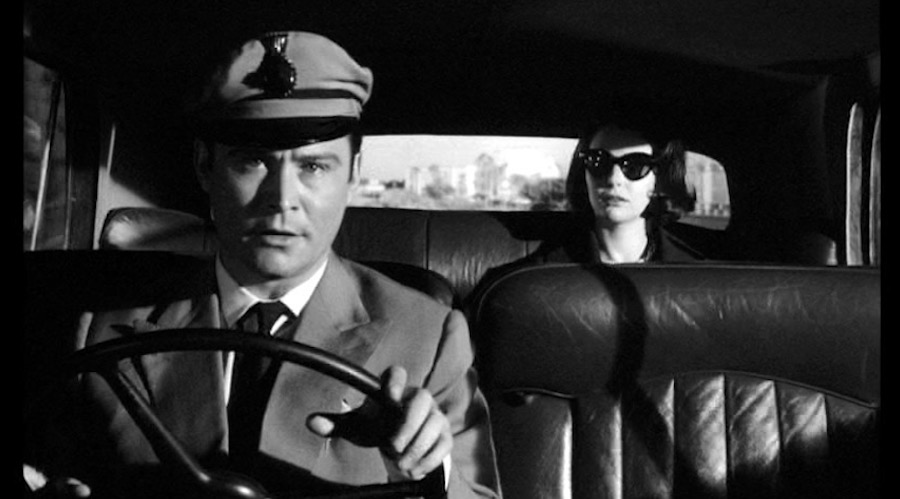


3. HAMMER VOLUME FOUR: FACES OF FEAR (Indicator)
Indicator's fourth box set of Columbia Hammer titles is, to put it plain, their best yet, collecting Terence Fisher's THE REVENGE OF FRANKENSTEIN and THE TWO FACES OF DR. JEKYLL, Seth Holt's suspense thriller TASTE OF FEAR (aka SCREAM OF FEAR), and Joseph Losey's masterful THE DAMNED (aka THESE ARE THE DAMNED), which may be my own favorite Hammer film of all and a science fiction film I consider equal to METROPOLIS at the very least. The films have not been equally upgraded; REVENGE is given a powerful 4K reading (if you know and love the film, and whether you saw it theatrically or just know it from lesser home video incarnations, the red lettering of the main titles will knock you back in your seat) and THE DAMNED's 2K upgrade is lovely; but this is not to say there's anything disappointing about how the other two look. I found TWO FACES (another Hammer favorite of mine) a revelation in its uncut form. As always, Indicator brings in a number of British Hammer authorities to provide opinion and context; especially appreciated is David Huckvale's talks on the musical scores of the various films, and the female perspectives brought to bear on the heroines of each picture. I've yet to delve into the audio commentaries, but we get Stephen Jones and Kim Newman on REVENGE, Josephine Botting and Jonathan Rigby on TWO FACES, Kevin Lyons on TASTE, and Kat Ellinger and Samm Deighan on DAMNED - the billing alone promises fascinating listens. This is a strictly limited edition of 6,000 numbered copies. Follow this link for a complete breakdown of the remarkably thorough contents.


4. UNIVERSAL HORROR COLLECTION VOLUME 1 (Scream Factory)
Collecting the remaining prime collaborations of Boris Karloff and Bela Lugosi - THE BLACK CAT (1934), THE RAVEN (1935), THE INVISIBLE RAY (1936) and BLACK FRIDAY (1940) - this box set brings together 2K scans of all but the first title (which is nevertheless beautifully detailed), along with an engrossing set of commentaries by Gregory William Mank, Tom Weaver, Gary D. Rhodes, Steve Haberman, Randall Larson, and Constantine Nasr. These are the foremost scholars on the subject and their talks take many different approaches to their subjects, ranging from great intensity, fannish veneration, scholarly distance, juicy gossip, even occasional irreverence - sometimes all in a single commentary! The set also includes a background documentary about the two stars that graduates from disc to disc like chapters from a fat, rollicking, illustrated book exploring their personas, their respective fortunes, and their much-speculated-upon rivalry. Scream Factory has since issued two more such collections of the studio's most macabre B-pictures (VOLUME 4 is coming in March), as well as a stand-alone release of Robert Florey's MURDERS IN THE RUE MORGUE (1932) with Lugosi, which stands as one of the finest film restorations of the year.


5. THE DEVIL RIDES OUT (Scream Factory)
This the first-ever Blu-ray release of this Hammer classic in its original form; an earlier UK release tinkered with the sadly unfinished climactic special effects footage in an unfortunate attempt to bring them up to date. Seeing it again confirmed a few things for me, but I can sum them up in a single line: this is arguably the best work Terence Fisher, Christopher Lee, and Richard Matheson ever did for the screen. Happily, the disc gives the film all the contextualizing it deserves, including the Christopher Lee/Sarah Lawson commentary from the previous DVD release, a new and invigorating commentary shared by Constantine Nasr and Steve Haberman, and featurette input from Kim Newman, Jonathan Rigby, Marcus Hearn and others.


6. ROBOCOP LIMITED EDITION (Arrow Video)
Ken Russell once famously said that Paul Verhoeven's ROBOCOP was the greatest science fiction film since METROPOLIS, praise that covered half a century. This 4K restoration lovingly preserves all the lustre it ever had and brings us into closer contact with some great performances. In addition to Peter Weller's deeply felt starring role, it's poignant to revisit the raw youthful ambition of Miguel Ferrar's performance. Priced at less than $30 at Amazon, this is much more than a two-disc set; it's also not merely three different versions of the film - just follow the link to look agog at the extras and bonus content. Get it before they're gone. PS: There are also three distinct soundtracks on offer. They're all good, but top marks go to the 4.0 theatrical mix.


7. ONCE UPON A TIME IN HOLLYWOOD (Sony Pictures Home Entertainment)
This is the only contemporary film on my list, which is at least partly due to my not seeing many new genre films this past year. Even so, each new viewing of this picture - written by Quentin Tarantino in a kind of celebration of the VIDEO WATCHDOG ethic - makes it more and more intoxicating; on the big screen, it's environmentally absorbing, and on Blu-ray it's Robert Richardson's master class in how to combine camera movement and historically recreated detail. Nearly every shot has something in it that's hypnotic, nostalgic, and loving. Some people will tell you this film doesn't have a plot, but it's there - just really spread out over an impressive territory, much like Los Angeles itself. Accompanied by 20 minutes of deleted scenes and five shorts to enhance one's appreciation of the cinematography, the clothes, the art direction, and the cars, this is an immensely satisfying disc but I wouldn't be surprised if a more deluxe package comes along later. In the meantime, I recommend Twilight Time's Blu-ray of Jaques Demy's THE MODEL SHOP for a terrific aperitif.


8. ALPHAVILLE (Kino Lorber)
Before ROBOCOP was made, novelist J.G. Ballard claimed Jean-Luc Godard's ALPHAVILLE as the greatest science fiction film ever made - and again, who am I to argue? This is another top shelf Studio Canal 4K restoration, but the black-and-white image retains a certain coarse quality that was apparently - as Anna Karina explains in a 4m interview segment - baked into the picture by Godard's use of a then-new film stock that could shoot in low light. Though ALPHAVILLE has enjoyed a past Criterion release, this is the first ever to include the film's English dubbing track, for which many of the film's American admirers have a special affection as it was how the film was initially shown here in the States. My audio commentary aspires to give equal time to Godard and star Eddie Constantine, and it includes input from Eddie's daughter Tanya (who was a visitor to the set) as well as from co-star Christa Lang Fuller.


9. DEAD OF NIGHT (Kino Lorber)
There were earlier horror anthology films, silent ones and maybe one or two sound ones made in Germany, but this is the acknowledged starting point of all those that would famously follow, from DR. TERROR'S HOUSE OF HORRORS to SCARY STORIES TO TELL IN THE DARK. More importantly, the film's various directors (particularly Basil Dearden and Alberto Cavalcanti, though Charles Crichton is also aboard) adeptly raise its shocks to a level stronger than what came before, much as THE EXORCIST would so again in the 1970s - watching it, it's very easy to understand how postwar audiences would have been jolted by it. The perfect fodder for a popcorn and gooseflesh night. There is a slight but persistent scratch on the print but it's worth it to see the film a grade closer to its original camera source; there is contrast and detail here never before seen in earlier renderings. There is a terrific feature-length supplement, "Remembering DEAD OF NIGHT" with on-camera reminiscences from Keith M. Johnston, Danny Leigh, Kim Newman, Matthew Sweet (not the musician), Jonathan Romney, Reece Shearsmith, and John Landis - and I provided an audio commentary, which SLANT Magazine's Chuck Bowen described as "characteristically detailed and erudite." 


10. FRITZ LANG'S INDIAN EPIC: THE TIGER OF ESCHNAPUR / THE INDIAN TOMB (Film Movement)
This lavish diptych was producer Artur Brauner's bid to tempt Fritz Lang back to postwar Germany to direct motion pictures. For confounding reasons - possibly political, but more probably rooted in American International's decision to whittle this opulent masterpiece down to a combined single-feature length - it has never enjoyed the respect here that it fully warrants. The story itself is pure pulp, but the rest is eye candy of the highest caliber - never moreso than when American actress Debra Paget performs two of the most erotic, downright tantric dances in film history. Not available on disc since Fantoma's 2003 DVD set, both films have been treated to 4K restorations but here include only a subtitled German sound option - so hold onto the Fantoma disc if you want to reserve the English dub option never otherwise heard in this country in its entirety. David Kalat provides two remarkably thorough audio commentaries, incorporating a wealth of research. Other supplements include a 21m making-of documentary, a 36m Mark Rappaport visual essay on La Paget, and an illustrated booklet including a Tom Gunning essay.


11. HERCULES IN THE HAUNTED WORLD (Kino Lorber)
The directorial filmography of the great Mario Bava takes another long stride toward completion with HERCULES IN THE HAUNTED WORLD - his second feature as director, his first in robust Technicolor, and an early return to the sword-and-sandal genre. Like PLANET OF THE VAMPIRES, the film is an exercise in how to pull the most rewarding rabbits out of a cheap hat, giving us not only Bava the director but Bava the maestro of special effects magic, all produced using charmingly antiquated yet convincing in-camera techniques. Reg Park makes a splendid Hercules, and the story - though it doesn't quite makes sense and evinces a lot of rewriting during production - never stops moving, whether it's forward or sideways. This double-disc set includes no less than three different cuts of the film (Italian, British, and the extensively tinkered-with American version, never before officially released), along with a lengthy if sparse interview with co-star Giorgio Ardisson (then struggling with throat cancer) and my audio commentary, first released on a 2018 Koch Media BD in Germany. That release included a bonus feature as an extra, Mario Soldati's THE TAMING OF DOROTHY (1950), which Bava photographed.


12. DER GAUNER VON BAGDAD aka THE THIEF OF BAGHDAD (Colosseo Film)
Arthur Lubin's THE THIEF OF BAGHDAD was made around the same time and I've been waiting literally decades for it to make the leap to disc; it's been missing in action since its 1980s release on Embassy Beta and VHS. Though the special effects of this glorious Steve Reeves fantasy are credited to the British technician Tom Howard, and its miniature scale models attributed to Joseph Natanson, the film also features glass matte paintings and second unit direction by Mario Bava - who chose not to be credited to protect his then-new advent into the director's chair. This German import disc marks the first time the film has been available in full widescreen and its colors, art direction, wardrobe, choreography and battlefield spectacles (one involving a magic army of Reeves lookalikes) are a constant treat for the eye, while Carlo Rustichelli's score blends ethereal exotica and darkly suspenseful cues reminiscent of his work on BLOOD AND BLACK LACE. I've heard complaints about not all the shots looking so great, but the brief shots of slightly coarser quality were all mildly compromised by optical dissolves and have always looked this way.


13. BLOOD HUNGER: THE FILMS OF JOSÉ LARRAZ (Arrow Video)
A box set collecting three of the most representative works of the late Spanish specialist in erotic horror and suspense: the debut feature WHIRLPOOL, not available for viewing for almost 50 years; his most famous feature VAMPYRES; and a powerful and ambitious art feature about the potency of myth, THE COMING OF SIN. Audio commentaries by Samm Deighan, Kat Ellinger, and myself help to fill in the blanks of what's missing and to contextualize what's here; also among the extras providers are Kim Newman, Marc Morris, various cast members, and archival interviews and video of Larraz himself, who was quite a character. The 2K restorations of all three features are superb and one sincerely hopes another such set will follow to prolong the conversation.

13 HONORABLE MENTIONS:

1. THE QUEEN OF SPADES (Kino Lorber)
Thorold Dickinson's enthralling British production from 1949, based on an Alexander Pushkin story, is really an historical melodrama and only tangentially fantastic - Dame Edith Evans stars as an aged Countess who is rumored to have sold her soul for the secret of winning at cards, a mystic secret hungrily coveted by a penniless young officer, played by an intense Anton Walbrook. It's as gripping and dreamy as any Technicolor Powell and Pressburger epic.  Graced with a thoroughly informative commentary by Nick Pinkerton, two archival interviews with Dickinson, and an elegant video essay by author-critic Philip Thorne.

2. BLACKMAIL (Kino Lorber)
Includes both the celebrated sound and overlooked silent versions, as well as my audio commentary. According to DVD Beaver, it's at my "usual proficient level and adds significant value and appreciation."

3, SCARS OF DRACULA (Scream Factory)
The extras, notably the new commentary by Constantine Nasr and Randall Larson, and a new 18m documentary, goes a long way toward explaining the shortcomings of a beloved but compromised film.

4. VIY (Severin)
The most celebrated of Russian horror features, distinguished by wonderful special effects sequences by the great Aleksandr Ptushko, makes its Blu-ray debut. Includes "The Portrait," a silent-era short by Ladislas Starewitch, which anticipates THE RING by nearly a century.

5. FANTOMAS THREE FILM COLLECTION (Kino Lorber)
A sterling presentation of Andre Hunebelle's comic crime fantasies, including two sequels that never before had a US release. My audio commentary accompanies the first.

6. THE MAN WHO LAUGHS (Flicker Alley)
One of the year's most impressive 4K restorations, this Blu-ray makes Paul Leni's silent masterpiece almost contemporary in its presence. It also offers a choice of musical accompaniments and a wealth of enriching bonus content, including a Kevin Brownlow essay in the accompanying booklet.

7. QUATERMASS II (Scream Factory)
8. QUATERMASS AND THE PIT (Scream Factory)
Having these two films on Blu-ray is absolutely essential, but under the direction of producer Constantine Nasr, these discs represent important new blocks of research. Three (count 'em), three new commentaries on QUATERMASS II (Ted Newsom, Constantine Nasr and Steve Haberman, and the classic Val Guest and Nigel Kneale track), while PIT includes two commentaries (Bruce G. Hallenbeck, Nasr and Haberman) and more than an hour of new on-camera interviews with various cast and crew members and Kneale's widow Judith Kerr (who has since passed away).

9. THE LOST SKELETON RETURNS AGAIN and TRAIL OF THE SCREAMING FOREHEAD (Hydraulic Entertainment)
Both funded by Kickstarter campaigns, these two fully-loaded discs bring two of Larry Blamire's surreal genre comedies into high definition, with the latter including two different cuts of the film, one being the US debut of his long-withheld director's cut. The extras include audio commentaries, behind-the-scenes documentation, and some brand-new comedy shots that are absolutely hilarious in their inspired weirdness. I'm counting these two as one, so less call this a tie!

10. TOYS ARE NOT FOR CHILDREN (Arrow Video)
11. AMERICAN HORROR PROJECT VOLUME 2 (Arrow Video)
12. ALICE, SWEET ALICE (Arrow Video)
These three Arrow releases feel related, with TOYS and ALICE both belonging (and, to some extent, crowning) the territory defined by Stephen Thrower's book NIGHTMARE USA and the AMERICAN HORROR PROJECT series. The three titles included in the second AHP box set (DREAM NO EVIL, DARK AUGUST, and THE CHILD) are minor disappointments but the way the set contextualizes and analyzes them is essentially faultless and where the real value of the set resides. TOYS is an inspired and unsettling descent into the sick underbelly of 1970s America, and ALICE - a film that may have somewhat worn out its welcome due to its inclusion in various PD DVD sets - is completely revitalized, not only with a much warmer looking restoration but an ace audio commentary by Richard Harland Smith.

13. LET THE CORPSES TAN (Kino Lorber)
Released early in the year, this is the third feature by the exciting team of Hélène Cattet and Bruno Forzani (THE STRANGE COLOR OF YOUR BODY'S TEARS) and, as with Tarantino, it proposes a new post-VIDEO WATCHDOG meta-language of storytelling. The genre here is crime with western elements - imagine BREAKING BAD co-directed by Alejandro Jodorowsky and Sergio Corbucci. The filmmaking is consistently dazzling.


RESTORATION OF THE YEAR:


HOUSE OF SEVEN BELLES (ByNWR)
The sole work print of Andy Milligan's not-only-long-lost but never-completed antebellum, anti-everything epic has been treated to a deluxe restoration by Nicolas Winding Refn's streaming-only channel and is also due to screen on MUBI. Say what you will about it, HOUSE is unmistakably the work of its wonderfully deranged director/photographer/editor/costume designer and this is an important chapter of his story - the last of his Staten Island productions before he relocated to the west coast. The sort of major recovery one simply cannot stop gawking at in disbelief, this never could have happened without Andy's friend, biographer, and archivist Jimmy McDonough, whose completely redesigned and updated book THE GHASTLY ONE is due in March from FAB Press.

I am acutely aware that my list omits most everything of a contemporary nature and heavily favors the classic titles. I have only included titles I have seen. I'm sure there are many titles not on my list that probably belong there - to name just a few: Criterion's GODZILLA: THE SHOWA ERA FILMS; Arrow's deluxe box sets on NIGHTBREED, the RINGU series, and Akio Jissôji's BUDDHIST TRILOGY; and Kino Lorber's LA PRISONNIÈRE and so many, many others.

All in all, this was quite a bountiful year!  

(c) 2019 by Tim Lucas. All rights reserved.


Saturday, December 21, 2019

Filling The MILLION EYES Gaps

Lorna Thayer, Dona Cole and Paul Birch in the Roger Corman-produced BEAST WITH A MILLION EYES.


Mondo Digital recently ran a review of Scorpion Releasing's BEAST WITH A MILLION EYES and included some much appreciated words for my "in-depth and rewarding" commentary. Not having yet received my contributor's copies of the disc, I was disappointed, however, to learn from their coverage that "There are some extremely long silent gaps here, though that may be due to the same factors involved in other MGM-connected audio commentaries over the past year or so (to put it tactfully)."

It's a personal rule for me, when doing commentaries, to avoid dead air as much as possible, though I do sometimes allow for silences where I want to focus the listener's attention on a particular passage of dialogue, music, or something else on the film's soundtrack. However, MGM (from whom this title was sublicensed) has their own concerns in these matters, which means that all commentaries now submitted to them must be vetted by their legal team. I have no control over this; my contract with MGM stipulates that they are not obliged to use "any or all" of the material I submit, so while I can certainly wish it were otherwise, it's not really my place to complain. However, some consumers have, and it is within my rights to make them feel better about their purchase by sharing here the material they won't find anywhere else.

One of these consumers, Mark S. Zimmer, gave his copy of the disc a close reading and responded with a list of eight spots where he noted significant gaps in my commentary. I have checked his findings against my original typescript, and the following breakdown will show you where, when, and what content was deleted from the track I submitted. 

24m 58s: Anima animal turned loose against the mother... [over a minute gap] If we have any... 

Missing: I haven’t gone back to compare the two, but doesn’t the setting of this film – and its use of the axe – remind you a bit of William Castle’s STRAIT-JACKET, made in 1964?

28m 13s: You've just taken an axe to the family dog... [45 seconds gap] I think Dona Cole pays her dues...

Nothing is missing here.

29m 45s: Force that has taken hold of their very lives...[1-minute gap] For a 1955 film...


Nothing is missing here.

34m 00s: Death of the American Dream...[1 1/4 minutes gap] Again there is the assertion...


Nothing is missing here.

36m 50s: Pet mule or a pet cow... [FOUR+ minute gap] I shouldn't interrupt myself...


Missing:

So were its ideas original or did they come second-hand? And if so, what were its antecedents?

One that I have already hinted at – and which I want to address first, during this chicken attack - is Daphne Du Maurier’s novella “The Birds.” It was first published in 1952, and was subsequently performed on radio by the shows LUX RADIO THEATER and ESCAPE in 1953 and 1954, respectively - and then as a TV adaptation on the CBS series DANGER in May 1955. So screenwriter Tom Filer had numerous opportunities to be acquainted with the story, if the similarities were not entirely coincidental. The similarities are actually extensive. Like this film, Du Maurier’s story is set on a ranch or farm, and it focuses on a man and his daughter, as well as a neighboring family and workman. In BEAST, the threat visiting the ranch is first perceived as an irrational attack of birds; as the story continues, we see them operating with intelligence, even performing kamikaze dives on transformers to disrupt people’s communications with the outside world.

What is most interesting about this connection is the extent to which Alfred Hitchcock’s later filming of THE BIRDS (in 1962) shares ideas in common with this film, rather than the Du Maurier story. For example, when the aerial buzzing of the Kelley home by the spacecraft breaks their glassware and sets all their picture frames askew, the home’s interior exactly resembles the look of Jessica Tandy’s home in the wake of its bird attack. In a few minutes from now, Allan is going to discover his neighbor Ben Webber’s dead body, in a scene that is very similar to the way Mitch / Rod Taylor would discover Annie / Suzanne Pleshette’s dead body in THE BIRDS. Allan’s daughter Sandy will eventually suffer a minor breakdown as a result of the attacks, withdrawing into herself and becoming almost catatonic – as Melanie Daniels / Tippi Hedren would in THE BIRDS. This film also builds to a “Love Conquers All” finale and, in Hitchcock’s THE BIRDS, the little girl played by Veronica Cartwright pleads with Mitch to let her take with them the love birds that Melanie gave to her as a gift. The love birds are a fascinating element because they are so ambiguous – in a sense, they seem to attract the fury of other birds, but as the film reaches its final fade, the birds seem to reach a very tentative state of truce as Mitch and Melanie, armed with the love birds, gingerly navigate a path through these settled furies, the minefield of her trauma, toward a loving relationship. The film is almost a poetic metaphor for what Hitchcock’s MARNIE would be about. If you think Hitchcock was somehow above being influenced by this level of filmmaking, look once again at PSYCHO and its promotional ballyhoo and the prior success of William Castle and his brand of horror exploitation.  

On a related note, in 1961, author Fredric Brown published a novella called THE MIND THING, whose story resembles the alien possession plot we find here. I have read an unconfirmed reference on the internet that Alfred Hitchcock’s company had optioned THE MIND THING in the wake of PSYCHO’s success, but made THE BIRDS instead… if true, this data could provide us with a fascinating explanation for the unexplained bird attacks in that classic motion picture. I’ve heard THE BIRDS described as Hitchcock’s only science-fiction film, and this connection would make that description still more plausible. 

42m 0s: Related in a sense to Him's inability to speak... [1-minute gap] By examining newspaper pages...

Missing: As for the idea of an indescribable alien being finding shelter in a variety of human and animal forms, this can be traced back to John W. Campbell Jr.’s WHO GOES THERE? – first published in the August 1938 issue of ASTOUNDING SCIENCE FICTION and subsequently filmed in 1951 by producer Howard Hawks as THE THING FROM ANOTHER WORLD, and more faithfully filmed by John Carpenter in 1982 as THE THING.  The Hawks picture, directed by Christian Nyby, could have influenced Corman and his screenwriter, but only as a result of leading people back to the original Campbell story. Even before this well-known tale, Campbell had written “Brain Stealers from Mars” for THRILLING WONDER STORIES, in which alien beings, unknowingly living amongst Earth people disguised as their friends and neighbors, comment wryly on their activities. I should mention that, within a few years of this film, Corman would similarly produce a film called THE BRAIN EATERS (1958), another of his “invisible monster” movies, that was subsequently charged with plagiarism by Robert Heinlein, who saw it as a rewrite of his novel THE PUPPET MASTERS. The conflict was settled out of court. 

44m 12s: Reckless paranoid actions of others... [1 & 1/2 minute gap] My friend and colleague Steve Bissette...

Missing: As I mentioned earlier, another of this film’s clear antecedents is Charles Finney’s novel THE BODY SNATCHERS, serialized over three installments in the pages of COLLIERS Magazine as this film was being scripted and sent into pre-production. Not only is it a valid predecessor due to its alien possession angle – which had also been an important part of William Cameron Menzies’ INVADERS FROM MARS, released in 1953 – but because, unlike the film version that would soon follow, the novel found closure in a “love conquers all” finale, which sends the aliens and their pods back into space, after a hard reconsideration of the value of Earth people. So THE BEAST WITH A MILLION EYES made full use of the finale that Don Siegel rejected in favor of a more political “wake up” statement. But Corman was still just getting started with this picture; had this film been made closer to 1963, around the time of his movie THE INTRUDER, I don’t think the “love conquers all” message would have sufficed for him any longer.

48m 30s: It's closing in, she tells her mother... [45 seconds] Carol doesn't want to leave Alan...
Nothing is missing here.

50m 47s: More content with what we've been given...[2 minute gap] The attack of the birds...


Missing at 52:07: Here we have another scene that strongly foretells Hitchcock’s THE BIRDS, but sadly the film couldn’t afford to do its script justice.

Finding out what was deleted from the track is illuminating to me, as it emphasizes concerns about commentators tracing connections between the distributor's property and other properties they may or may not own. So this is a line of thought that I and other commentators may wish to avoid when approaching future work. Of course, drawing such points of comparison not only enriches the viewing experience but tells us where a film fits into its genre historically; it is an important facet of critical thinking. It's also certainly within MGM's rights to prefer to avoid such discussions altogether. That said, I would like to submit the constructive criticism that it would be to my and many others' advantage if a Commentator's Guide existed to acquaint us film historians with a list of potentially sensitive topics best to avoid so that, in future, everyone might bring their best and most complete effort to the work at hand.

(c) 2019 by Tim Lucas. All rights reserved. 


Monday, December 16, 2019

RIP Anna Karina (1940-2019)

In the wake of Anna Karina's death two days ago at the age of 79, I’ve been wondering what I might say about her that would be as meaningful as she was to me. Of late, I’ve been reading THE NEW NATURE OF THE CATASTROPE, a collection of "Jerry Cornelius" stories by Michael Moorcock and other writers, and somewhere in the book someone, possibly Brian Aldiss, observes that Jerry Cornelius was more of a technique than a character. I believe the same could be said of Anna Karina; she didn't play characters so much as she brought a particular and utterly exclusive color to a picture - and yet she was all women. To be more precise, she was a tone, a fantasy, an insight, a line of poetry that could be applied to all women, or at least the one who, at a given moment, you might love.

Last night, for the first time since I finished my audio commentary for it, I looked at Kino Lorber's Blu-ray of ALPHAVILLE and noticed two things I should have mentioned. First, even though the information is given about her and Eddie Constantine earlier in the track, I wish I had pointed out once again at the end of this movie about the power of words that both she and Eddie went on to write novels. This is an almost miraculously rare detail in cinema. And secondly, I wish I had noted something that Jean-Luc Godard seems to have discovered about her first, and perhaps exclusively: that she was that rare actress who was inherently cinematic. Her face, her expression, her forming of words needed no editing to make her magical. There was something about her that seemed to resist, if not defy, editing. Most actors' performances have to be guided, shaped, even created in the editing.

She was a true fauna of the cinema, a reliable source of truth and light in darkened auditoriums. For as long as her movies survive, generations to come will be able to see and understand in a single throw what we boomers perceived as cinema.

(c) 2019 by Tim Lucas. All rights reserved.


Thursday, November 28, 2019

Joe Sarno Book Update

Joe Sarno attending a 2006 screening of ABIGAIL LESLEY'S BACK IN TOWN.
Yesterday, as I was finishing up the 1968 chapter for my current book in progress - GAMES PEOPLE PLAY: THE EROTIC CINEMA OF JOE SARNO - I had an unexpected eureka. As I’ve been working on it these last few years, my intention changed from the initial plan of writing one book about everything, to writing one book on his 1960s films and another on his work in the 1970s “and beyond.” However, as I put the final touches on the group of chapters covering his prodigious output in 1968, I came to a sudden realization that the manuscript's arc was complete: it had to end here - with the last film of his black and white period (PASSION IN HOT HOLLOWS), his final and now full-time transition to color (MARCY), and the hugely successful theatrical release of INGA.

1960-1968 may sound like a narrow field of exploration but it actually covers some 35 films, more movies than most directors get to make in a lifetime. The second volume - which I plan to call THE GREATEST ANIMAL ACT ON EARTH (a phrase used in his 1964 magnum opus SIN IN THE SUBURBS) - will actually cover fewer titles at the same depth, maybe 24, focusing primarily on his softcore work and some transitional hardcore features that warrant consideration with his best and most effective work. I’m only going to cover the dozens of hardcore quickies he made in the 1980s in a chapter of thumbnails, because Joe took no pride in them and frankly they don’t interest me either.

Dividing his oeuvre at this juncture will allow the second book to begin with Joe and Peggy’s nearly two-year stint in Sweden and Denmark, where and when they made a number of important pictures, including THE SEDUCTION OF INGA. Had I stuck with my original plan, I’d have to open Book 2 with HORN A PLENTY (presently unavailable) and THE YOUNG EROTIC FANNY HILL (a movie Joe disliked), which would not be so energizing.

So, no one could be more surprised, but I find my rough draft for Book 1 - close to 500 single-spaced pages - now suddenly in hand. The next step, of course, is to look it all over carefully and determine how much of this first half of the job is done.

(c) 2019 by Tim Lucas. All rights reserved.


Tuesday, November 19, 2019

Operation Commandos in Furs


Last year I realized that there are still a good many American International releases from the 1950s that I've never seen. I'd like very much to see them all - so I was delighted when I recently discovered that Shout! Factory TV (viewable directly on their website or via Amazon Prime app) is featuring a number of their rarely-seen war pictures this month.

Last night, I watched Burt Topper's TANK COMMANDOS, which takes place in Italy toward the end of WWII and features a surprisingly strong performance by Wally Campo, who I'd known only for being one of the striped-shirted workers aboard Vincent Price's Albatross in AIP's MASTER OF THE WORLD (1963). I have a feeling that not all the film was shot on location, but it's also quite possible none of it was, which made me more curious about Topper as a resourceful, overlooked low-budget filmmaker. To make it even more interesting, it's very well photographed by future OUTER LIMITS DP John Nickolaus, who makes use of some clever glass matte shots, and credited with the sound effects is... you guessed it... Josef von Sternberg.


Tonight, I continued my little film festival with TANK COMMANDOS' original co-feature, Louis Clyde Stoumen's OPERATION DAMES - which is set in Korea 1950, where a small squad of US soldiers acquires the unwanted task of helping a group of USO showgirls out of enemy territory. It's kind of a stinker, but it has moments, not to mention one of Eve Meyer's only two feature film performances. You haven't lived till you've seen her try to camouflage herself by rubbing mud all over her face and then walk furtively through California foliage sporting some of the biggest blonde hair you'e ever seen. Earlier in the picture, there's a scene of several characters talking around a campfire that makes one's jaw drop when one of them casually mentions that it's the middle of the night - it's also broad daylight.


Afterwards, I happened to notice that Jess Franco's VENUS IN FURS was on Amazon Prime. It felt like serendipity because my copy of the new color edition of Stephen Thrower's MURDEROUS PASSIONS: THE DELIRIOUS CINEMA OF JÉSUS FRANCO had arrived today and I spent an hour or so very happily paging through it from cover to cover. It's beautiful. I checked the quality of VENUS IN FURS, which turned out to be very nice, and ended up watching the whole thing. It's still a spellbinder; it's Maria Rohm's masterpiece, even though this version does not represent Franco's original cut. As Mr. Thrower points out, there is actually no evidence that his original cut ever saw the light of day anywhere, or indeed that he ever finished the picture. Everything after the cop shows up is a good deal messier than I remembered, and if the two available cuts - the other being PAROXYSMUS, from Italian TV - tell us anything, it's that no one has yet been able to assemble a serviceable third act - nor an explanation for why Maria Rohm's hairstyle and color changes three times during the movie. The US cut comes closer to achieving a satisfying ending (though it is presaged in the hipster narration at least a couple of times), but the Italian version feels more like a Franco movie and it has a jazz soundtrack that I can actually believe was written by Manfred Mann and Mike Hugg. 


Maria Rohm in VENUS IN FURS.
When the end credits were rolling, I noticed that the post-production work on the picture was credited to Robert S. Eisin and Harry Eisen. By checking their IMDb credits, I see that Robert was the editorial guy and Harry was primarily a music supervisor, so Robert must have cut this US version together for Commonwealth United while Harry embellished the original soundtrack with library music by Stu Phillips and others.

I was startled to discover that Robert was not only the editor of Don Siegel's INVASION OF THE BODY SNATCHERS but was in charge of its post-production work, so he was the guy who changed the ending to please Allied Artists! He also supervised the US version of RODAN, which was similarly reworked with flashbacks and voice-over narration - and edited Albert Zugsmith's CONFESSIONS OF AN OPIUM EATER, which is just as trippy as the US cut of VENUS IN FURS. Bringing us back to where I started, Robert also turns out to have been the editor on a few of AIP's war pictures - SUICIDE BATTALION, JET ATTACK, and PARATROOP COMMAND. The IMDb also lists him as having done post-production work on Franco's 99 WOMEN, so it's likely that Franco's original cut of that has never been seen here. 

Eisen's career dates back almost 65 years, so it's almost certain he's no longer with us. Too bad - I'll bet he could have given a great interview.

(c) 2019 by Tim Lucas. All rights reserved.

Monday, November 11, 2019

Admit One: THROAT SPROCKETS


Sabrina Sharp as the Dark Lady in THROAT SPROCKETS. It's about time!


I'm not sure where the time went, but it was almost exactly nine years ago this month that I was invited to come up to the film factory at the Douglas Education Center in Monessen, PA to write and direct a short film based on my 1994 novel THROAT SPROCKETS. It was decided by my friend and executive producer Robert Tinnell in advance that I would actually direct two films - one that would serve as a trailer for my book or a possible feature film adaptation, and then a short sustained scene of my choosing. I was strongly petitioned to arrive with storyboards for the latter, and though I had not actually drawn anything in many years, I postponed the task until the night before my departure and somehow managed to produce more than 100 drawings on index cards. They definitely proved useful.


Hotel Scene original storyboards by Tim Lucas.
Both films managed to be completed ahead of schedule over a weekend shoot, with Douglas film students volunteering their time. They were superb. My producers Joseph Russio and Matt Deering were masterful in providing me with locations and vehicles I had no idea of how to go about acquiring. I didn't have too much control over casting, but I lucked out with the suave Christopher Scott Grimaldi playing the Ad Man, Brandy Loveless as the tattooed temptress Nancy Reagan, and a supporting cast that included Sabrina Sharp as the Dark Lady, Allie Lewis, Adrienne Fischer, and others too numerous to mention. The films were shot by Jarrod Yerkes and cut by Stephanie Fenrisson (now Akers) and R.J. Taylor, all of whom did brilliant jobs. Stephanie, Keith Holt and Jason Baker were all indispensable comrades in arms and art. When it was all done, I showed the work to Steven Severin of Siouxsie and the Banshees and he kindly allowed me to use the Banshees' song "Umbrella" in the trailer, and provided a solo cue recorded with his wife Arban Severin for the hotel scene. He seemed favorably impressed when I showed him the final result, and I'm honored to have the music on the films.


C.S. Grimaldi and Brandy Loveless in the Hotel Scene.
Aside from a single public screening of the Hotel Scene at the 2011 Fantafestival in Montreal, few people have seen this work since it was done. Why? 

Well, for two reasons primarily: 1) I always hoped we might be able to work a bit more on the final sound mix of the hotel scene, where some dialogue is under-miked or spoken too briskly. Minimal looping would work wonders. Also, the idea was to use this material to pursue offers to complete the film, and with our respective workloads, neither Bob nor I had the time or means to do this. So the idea gradually became to hold back the material until it could promote the release of a new edition of THROAT SPROCKETS, which has been out of print now for more than 20 years. It may well come back into print in the next couple of years, but that's not now.

I revisited this footage earlier today, made curious by an interviewer who asked to see it. It brought back such wonderful memories of the time I spent with all those gifted obsessives, many of whom had read my book - and I have to assume that some of them never saw this footage - so I asked Bob Tinnell (who is currently occupied with opening his new feature, FEAST OF THE SEVEN FISHES) if he would mind if I set loose the Kraken.

He shot back, "DO IT!"

And so I am - and if I need a reason after all this time, here's a good one. It's 2019 - the 25th Anniversary of my first published novel.

And so... ladies and gentlemen, step right up.

Here is your ticket to the THROAT SPROCKETS trailer.
The password is "eros."

And here is your ticket to the THROAT SPROCKETS Hotel Scene.
Again, the password is "eros."

The unclear dialogue at the outset of the Hotel Scene is as follows... 

NANCY: That campaign's everywhere nowadays. Is it one of yours?
AD MAN: Why do you say that?
NANCY: Because it looks like the poster for the...
AD MAN (shushes her): 'Subliminal' means you're not supposed to notice!

The poster she's referring to is this one:

Original poster art by Dorian Cleavenger and Radomir Perica.

(c) 2019 by Tim Lucas. All rights reserved.

Thursday, November 07, 2019

This Month: Harryhausen at the New Beverly

The awesome Tales attack in Ray Harryhausen's JASON AND THE ARGONAUTS.
This month at the New Beverly Cinema in Los Angeles, they are hosting a month's worth of Ray Harryhausen matinees - a rare opportunity, for those in the area, to immerse themselves in Dynamation on the big screen in 35mm! They asked me to write about the four pictures being shown this month and here's a link to my article.

(c) 2019 by Tim Lucas. All rights reserved.  

Tuesday, November 05, 2019

Thoughts on Hammer's TWO FACES OF DR. JEKYLL


Paul Massie as Hyde.
Paul Massie as Jekyll.
I may be alone in this, but I admire THE TWO FACES OF DR. JEKYLL (which I just watched as part of Indicator's forthcoming HAMMER VOLUME 4: FACES OF FEAR box set - a beautiful presentation) and consider it one of the most interesting interpretations of the tale. People have problems with it because it’s not a horror film and Jekyll doesn’t become a “monster” in the literal sense. The movie’s one insurmountable problem has always been Jekyll’s beard - where does it go when he becomes the clean-shaven Hyde? Director Terence Fisher must have been aware of this; I don’t know if it was specified in Wolf Mankowitz’s script, but it got past any number of possible objections before it reached the screen, so it must have a reasonable explanation. 

Watching the movie again, the thought came to me that people see in other people what they want to see (think of those young infatuated women who attended Ted Bundy’s trial); they also see in themselves what they want to see, whether they are being narcissistic or hyper-critical. So it’s becoming my interpretation that the film is subjective rather than objective, or at least an objectively presented story tainted with subjectivity; that it’s Jekyll’s own deluded dream of what happens, the account as he (or Hyde) writes it down in his notebook. For all we know, it could be Jekyll’s own belief in Hyde that persuades others that he is two different people. I shared these thoughts with my Facebook friends, some of whom pointed out that it is just a movie, and that the detail of Jekyll's vanishing/reappearing beard shouldn't be any harder to accept than his ability to change his sex back and forth in DR. JEKYLL AND SISTER HYDE (1971).

At the bottom line, this is a story - a fantastic story at that - I can accept as being told in a symbolic way. Indeed, after seeing this film ten times or more over the years, I’m beginning to wonder if Jekyll’s wife Kitty and the snake dancer are really two different women, as a big part of Hyde’s scheme is putting the two of them in each other’s beds - that is, reconciling them (and thus himself, in relation to them) in both his mind and libido. At any rate, this study in anarchy juggles more interesting ideas and issues than most other Hammer films combined, so it’s always been a favorite.

(c) 2019 by Tim Lucas. All rights reserved.

Monday, November 04, 2019

WEREWOLF and BYLETH: New Severin Titles Reviewed


Coming to Blu-ray tomorrow - Tuesday, November 5th - from Severin Films are two Italian horror items: Paolo Heusch's WEREWOLF IN A GIRL'S DORMITORY (1961) and Leopoldo Savona's BYLETH, THE DEMON OF INCEST (1972). Though produced a decade apart, the two unrelated films prove to be fairly well-matched as a double feature.


Giallo touches in the Werewolf film.
Its American title makes a ready mockery of WEREWOLF IN A GIRL'S DORMITORY, originally titled Lycanthropus. It's actually a humorless tale of stirred and thwarted male libido set in a girls' reformatory - an important key to its subtext. Though an early entry from the Golden Age of Italian Fantasy, it's unusual in that it's a contemporary gothic, with its whodunit aspect more akin to a giallo than a supernatural horror movie. Surprisingly, it even includes a scene involving an archetypal black-gloved killer, wielding a scary syringe, a few years before Mario Bava made such imagery his own in BLOOD AND BLACK LACE (Sei donne per l'assassino, 1964).


Mark Damon as the haunted anti-hero of BYLETH.
On the other hand, BYLETH, THE DEMON OF INCEST (Byleth, il demonio dell'incesto) was made six years after the last gasps of Italy's classic horror cycle (1957-66) and thus represents one of a few vain attempts to revive or sustain a specifically Italian twist on the genre. A historical gothic with kinky elements, it's about a noble-born incel who comes unhinged when his more-than-beloved sister pays a visit to his isolated castle with a new husband in tow.

Weirdly, WEREWOLF, the more contemporary of the two films, is set in England and shot in black-and-white, while BYLETH, the historical thriller, takes place in 19th century Italy (it's incredibly rare for an Italian thriller to admit its nationality) and is lensed in color. Also, though I could not find a perfect match to illustrate my point, the exterior locations in both films seem related and they may have shared one or two exterior locations (see below). In his book Italian Gothic Horror Films, 1970-1979 (McFarland) Roberto Curti reveals that BYLETH was filmed at "the baronial palace in Borgo del Sasso, in Cerveteri."


Not precise matches, but eye-catching nonetheless.

Not your hairiest werewolf.
Scripted by Italy's genre-writing machine Ernesto Gastaldi, WEREWOLF IN A GIRLS' DORMITORY was given the usual English camouflage before it was released - Heusch credited as "Richard Benson," Gastaldi as "Julian Berry," and composer Armando Trovajoli as "Francis Berman," etc. Indeed, in the States, MGM swept away most of these irrelevancies from the outset to focus for maybe 10 seconds on a tie-in theme song, "The Ghoul In School" by The Fortunes - not to be confused with the same-named British beat group who scored a hit around this same time with "You've Got Your Troubles." The song was released with some self-respecting distance on MGM's Cub Records sub-division label. Cursory but contractually obliged actor credits were clipped from the front and tacked onto the end. The film's producers did not renew their MGM contract when it expired, so that version fell into the public domain, resulting in several poor quality, incomplete, and ultimately misleading versions infiltrating the marketplace.  


Barbara Lass.
Running about a minute longer than the American version, the original Italian cut presented on Severin's disc is, by far, the best the film has ever looked or played in this country. The original opening titles show a Saul Bass influence and allow the film its intended somber quality. If you choose the Italian language option with English subtitles, you'll find that a more adult film results, one in which the characters and their teachers come across as more mutually compromised and corrupt. Carl Schell, the male lead, is a new teacher at the reformatory, sent there as penance for a charge of manslaughter; the female charges, led by the soulful and winsome Barbara Lass (née Kwiatkowsa, the first wife of Roman Polanski - who plays Brunhilda in the Italian version, Priscilla in the English dub), are accustomed to selling their sexual favors in exchange for preferential treatment; Sheena, an icy aging instructor in the Harriet Medin tradition is married to an impoverished nobleman (Maurice Marsac, whose career extends to much American television including The Beverly Hillbillies and Green Acres) whose sexual trysts with the werewolf's first victim lead to blackmail and a not-very-energetic police investigation. The film is sometimes criticized for its not-very-hairy werewolf but this is a cultural variation and one probably truer to actual case histories of lycanthropy than what movies like THE WOLF MAN (1941) gave us. The script stops just short of drawing a pronounced parallel between the werewolf and the sexual predator but the pieces are certainly there to be connected, as is the similar relationship between the respective partners who have perhaps enabled their behavior to prolong the illusion of their own happiness.


Curt Lowens and Luciano Pigozzi.
Gastaldi is the real auteur here, as the story and its characters resonate with others he created in other films; Heusch's direction is not particularly inspired but competent. The atmosphere is due entirely to Renato del Frate's cinematography and special effects and particularly the oboe-driven Trovajoli score, alternately glimmering and gloomy, which bears many similarities to his music for Mario Bava's HERCULES IN THE HAUNTED WORLD (Ercole al centro della terra, 1961), made that same year. Bava favorite "Alan Collins" (Luciano Pigozzi) also brings interest to the film as a disfigured groundskeeper, as do uncredited walk-ons by the similarly ubiquitous John Karlsen and SUSPIRIA's Giuseppe Transocchi.

Severin's 1.66:1 disc includes a new interview with Gastaldi, which focuses almost exclusively on this film and reveals that Paolo Heusch was gay, known to his crew as "Paolina," and often directed his scenes while reclining on a chaise longue. (I can't wait for the Tim Burton movie.) The set also includes David Del Valle's interview/commentary with the film's werewolf Curt Lowens from the previous Retromedia DVD, a booklet reprinting an article on the film from one of the old Charlton horror magazines, and a second disc of Trovajoli's score (14 tracks, previously released by Digitmovies with the same composer's score for ATOM AGE VAMPIRE, Seddock, l'erede del Satana, 1960).

BYLETH, on the other hand, is a genuinely fresh discovery, never previously available in this country and a film that Severin discovered on the cusp of extinction, surviving only as a mildly imperfect German print called Trio der Lust, which is matched here with the incomplete surviving Italian track, both playable with English subtitles. It may be an Italian film, but the audio track defaults to German so much, and so distractingly, I recommend sticking with the German track - which is better acted anyway. Director Leopoldo Savona is probably best-known for the movie he did not make: it was he who began shooting the Viking Western Helmut il solitario, which ran out of funding and was later completed as KNIVES OF THE AVENGER (Raffica di coltelli, 1965) by Mario Bava.


Lionello spies on his sister's marital happiness.
After a pre-credits, post-coital murder that establishes the film's voyeuristic, psycho-sexual terrain, we cut to the opening titles, illustrated with various details of Gustave Doré etchings from Dante's Inferno, before Mark Damon is introduced as Duke Lionello Shandwell, to the tune of someone's electric fuzz guitar. (The score is credited to Vasili Kojucherov, who would subsequently score Damon's THE DEVIL'S WEDDING NIGHT.) Prone to nervous breakdowns as a child and incestuous longing for his sister Barbara (Claudia Gravy) since puberty, Lionello has spent some years alone since Barbara placed some deliberate distance between herself and her sibling. Left to his own devices, Lionello has become a solitary voyeur spying on the hayloft frolics of the hired help - but word of Barbara's pending return raises his hopes for the shared life he's always dreamed of. Unfortunately, she arrives with a husband, Giordano (Aldo Bufi Landi), who tries his best to befriend the brother who can only see him as a hated rival. Other expendable women pop up, allowing more murders to take place, and Giordano eventually traces the cause to a demon named Byleth - the most beautiful of all demons, according to legend, garbed in black astride a white horse. Barbara recalls that this obscure name was first invoked by Lionello as a child, around the time of his mother's violent death, and he has invoked it once again, summoning Byleth to punish the sexually active ladies with a trident-like neck impaler. The film's back story invokes the Catholic rites of exorcism more than a year before William Friedkin's THE EXORCIST (1973). 


Lionello unburdens himself to Barbara.
Italian Gothic horror encompasses a good many supporting characters like Damon, ranging from Franco Nero in THE THIRD EYE (Il terzo occhio, 1965) to Alessio Orano in Bava's LISA AND THE DEVIL (Lise e il diavolo, 1973), and Damon takes his performance through the roof, reminding us of Oliver Reed in CURSE OF THE WEREWOLF (1961) and almost every role ever played by Michel Lemoine. Unfortunately, none of the other roles are as persuasively cast, with Gravy most bland of all as the object of Lionello's obsession, so the story's perversity becomes more deadweight than pleasure. Savona's directorial bag of tricks is limited, his lack of visual imagination aggravated by a propensity for zooms, plodding POV shots of boots climbing stairs, and subjective handheld murder scenes. Despite these traits, BYLETH's rarity makes it a necessity for Italian gothic completists, but most any film of similar genre from this time and place is better. I could best compare it to Aristide Massaccesi's DEATH SMILES ON A MURDERER (1973), as I imagine it might play if deprived of Klaus Kinski's commanding cameo and Berto Pisano's literally enthralling score.

In his aforementioned book, Roberto Curti lists BYLETH's original running time at 95 minutes and the German version at 81 - the running time here rounds out to 83 minutes, so there must be a great deal of footage missing from the irretrievable Italian version. This may be one of those cases where the tighter presentation is the kinder gift to posterity.

(c) 2019 by Tim Lucas. All rights reserved.