Monday, November 12, 2018

RIP Stan Lee (1922-2018)

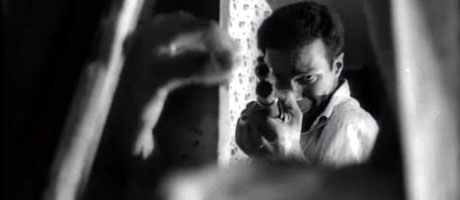
Stan Lee promoting DOCTOR STRANGE with Ditko hands.
My mother taught me to read, but Stan Lee and Forry Ackerman probably encouraged me to read more than anyone before I could find my own way. When I was a kid, he (or at least the work he signed, it usually carried his unmistakable voice) gave me most of my ideas about what it meant to be a responsible adult, about how sometimes people’s best intentions were not enough, about the importance of continuing on when it just didn’t seem possible. I understand that he had flaws and faults of his own, as always seems to enter the picture with money and success, but when I think of all the talent he introduced and gave a regular platform and voice for so many years, how can I not be eternally thankful? 

I was actually there when what we now know as Marvel's Silver Age was starting up; I have vivid memories of getting THE AVENGERS #3 and THE AMAZING SPIDER-MAN #14 off of drug store spinner racks.  I remained a serious Marvel collector well into my early teens, when the company's product began losing its character as various of its classic creators left to pursue something closer to their real worth, and when Stan himself began relinquishing his writing duties - around the same time I was beginning to favor actual novels. To me, that decade of real time experience was every bit as privileged as having been around to witness the The Beatles.

Excelsior!

(c) 2018 by Tim Lucas. All rights reserved.

Monday, November 05, 2018

Finally Seeing THE OTHER SIDE OF THE WIND

Peter Bogdanovich and John Huston.
Now I can say that I have experienced Orson Welles’ THE OTHER SIDE OF THE WIND (playing this month on Netflix and in select theatrical engagements), but have I seen it? Is it possible to really “see” it in a single go? 

The storyline is simplicity itself: it's a portrait of a maverick film director (John Huston) on his 70th birthday, trying to find the funding for one last masterpiece that he's basically trying to will into existence without a script. Meanwhile, the old Hollywood studio system is crumbling around him and he must find the humility to beg intercession from a former admirer who has become the hottest young film director in town. It's very clearly about the ironic relationship between Welles himself and Peter Bogdanovich, the difference between them being that Welles refused to play himself. He also initially denied Bogdanovich the opportunity by casting Rich Little in the role of the young successor - ostensibly because he, like Bogdanovich, was known for doing impressions. When that casting failed, Bogdanovich stepped in. One wishes that Welles had been as honest and as brave. His absence from the film (save for a couple of questions his well-known voice addresses from off-screen to Lili Palmer in an interview) prevents the film from achieving supernova as a piece of meta-filmmaking. Huston's not particularly effective in a role that should be larger than life, and his casting underlines Welles' final film as a refusal to admit the obvious, an ironic concession to personal vanity, a backing-down from his last real chance at bat. 

Obviously, without Welles around to offer notes on the final edit it has been given here, this is more of an organization of materials than an actual Welles film, regardless of what the screen credits say. TOSOTW doesn’t have the immediacy of a great Welles film; it’s not really a film of great performances, oddly enough, though it has many great moments; it’s not something you would point to, to introduce someone to Welles as a filmmaker. I’m not even sure I can detect the breath of the living Welles in it. However, his fleeting shadow darts phantom-like between its edits, its bravura, and its paling anger and despair, fed up with the nonsense, the hell of other people that must be endured if one dares to chase the angels.

So much whirling, twirling, crossing the line, such egregious chaos and rule-breaking - the first half hour or so reminds me a lot of the first pages of Vladimir Nabokov’s ADA, where the author’s style is so exaggerated, impenetrable and ogreish that it seems dedicated to evicting all but its most dedicated, passionate, determined readers... but once you get past that, there are numerous pleasures in store, including a rare commodity in new movies, some genuine eroticism. In TOSOTW, the greatest pleasures pop out from the richly hued, widescreen movie-within-the-movie; it's during these passages, the ones most fraught with mystery and danger, that the film eases up, slows down, relaxing and giving the viewer a chance to absorb information at their own pace. What surrounds these astounding chunks of protein in the broth is much like life itself: reckless, free-wheeling, fraught with mistakes, regrets, flashes of humility, arrogance, and poetry.

If Welles had ever seen Dennis Hopper’s THE LAST MOVIE (1971), it might well have taken the wind out of his sails in terms of completing this project, because they are much the same animal - except here the villagers who survive the filming are not constructing cameras out of bamboo, but rather an effigy of Welles himself, who is seen only reflected in the eyes of a devoted cast and crew. Like most of his other features, this film is the story of a betrayal, or at least a perceived betrayal, and its fabric consists of everyone in the business who hadn't yet turned their back on Orson Welles. Perhaps the most loyal of all these individuals and individualists was the late cinematographer Gary Graver, whose arch visual style, as it plays around the hard edits, is not only aggressively Wellesian but occasionally evokes Russ Meyer - even before two characters bounce around in the buff on a set of bare bed springs. Thanks in large part to Graver, the greatest compliment I can give the film on the basis of a single viewing - and I think it's one that would very much please Welles - is that this film is as valid a monument to Oja Kodar as THE LADY FROM SHANGHAI was to Rita Hayworth. She is formidable and unforgettable in it.


Robert Random and Oja Kodar.

Like all Welles films, this is complex wine and a fast review would be well before its time. This will need to be seen numerous times - in all honesty, probably more by students, cultists and devotees than general audiences. It's possible that its legend was more valuable, more magical, than its fact - as was the case with Brian Wilson's long unfinished SMILE - but now that Welles' chimera has been coalesced into one thing, assembled (valiantly, by editor Bob Murawski) into a manageable document or entertainment, its admirers can proceed with the work of posterity, which is to say, taking it apart once again.

(c) 2018 by Tim Lucas. All rights reserved.


Sunday, November 04, 2018

For the Love of Toho III: SHIN GODZILLA (2016)

I realized, in the midst of my Toho viewings, that I have been remiss in buying Hideaki Anno's SHIN GODZILLA on Blu-ray. I had seen it once before and liked it, but evidently it was the English version I saw. The Japanese version, which I watched on Funimation's Blu-ray this evening, is a far sharper, more intricate piece of work.

I've told a friend of mine, who knows the film well, that he ought to write an "Annotated SHIN GODZILLA" and he's replied that one already exists - it's the subtitles of the film. This made me laugh, but now that I've seen the version he loves, I understand absolutely what he means.  It would take numerous viewings to grasp and absorb all that is going on, who everyone is, who they are named after, etc. This is a monster spectacle but in the truest sense; Godzilla's scenes inspire awe and constant surprise. He is not here to entertain us. He is like a mysterious, ever-changing spindle around which world events are suddenly obliged to revolve.

The movie has its faults, like the casting of Satomi Ishihara as the slinky Asian-American with her eye on becoming POTUS someday (in live audio Japanese, she is unconvincing as someone raised in America and hardly articulate enough in English to have attained political clout), but its narrative intricacies encompass so much else that such missteps are mere annoyances. Watching its hectic, intricate design speed past, I was reminded - oddly enough - of the movie I saw last night, Orson Welles' THE OTHER SIDE OF THE WIND, which also has crazy, whirling, unstoppable energy and a sly political side, but it tells a far more primitive story and, I would have to say, a more narcissistic one. SHIN GODZILLA has a kaleidoscopic complexion too, but it represents different nations and individuals of all classes while organizing a meticulous, faceted sense of strategy, all to a noble purpose - while at the same time satirizing ossified political structures and an over-informed, media-driven world that basically still doesn't have a clue.

I'm sure I'm not the first person to say this, but SHIN GODZILLA is the DR. STRANGELOVE of the 21st century and one of the most impressive feats of filmmaking in the last two decades. It is also genuinely awesome and frightening and, we realize as the end credits roll, humble.

If Ishirō Honda saw this film, on his best day, I believe he would stand up and applaud.

(c) 2018 by Tim Lucas. All rights reserved.


Saturday, October 27, 2018

For the Love of Toho II

GORATH (1962)
In its original Japanese version, Ishirō Honda’s GORATH is a masterpiece. Science fiction, drama, love, unrequited love, sacrifice, tragedy, sentiment - it has it all, but it also seems to me possibly Toho’s top technical achievement. It features some of the finest space effects filmed prior to 2001 (there is evidence in the film that Kubrick used it as reference) as well as spectacular demonstrations of matte painting and miniature set design - combining immense engineering skill and artistry, though much of it onscreen only fleetingly. As a film, it may not be as exploitable as the company’s kaiju eiga (one giant walrus aside), but considering this was made in the same year as KING KONG VS. GODZILLA, it’s clear where the filmmakers’ hearts most resided.


KING KONG VS. GODZILLA (1962)
If you have only ever seen the American version of this movie, you owe it to yourself to find a way of seeing the Japanese version, subtitled or not. Toho obviously went into the film with the intention of producing a blockbuster, and it was, but - as with the original KING KONG (1933) - it includes a critique of the blockbuster mentality. in this case a rather broad one. There is much to commend this film on a technical level, even though it falls somewhat short of the studio's highest standards, but it is plainly not the film it should have been and, for some of us who saw it at a magical point in childhood, not quite the film we remember. (Of course, the version released in America by Universal was quite different, including American onscreen commentators and a rummage sale of library tracks for replacing Akira Ifukube's epic score, included on the Japanese Blu-ray in its original stereo.)  Godzilla himself (looking more believably reptilian here than in most other films) is kind of a blur throughout the film, not doing much but lumbering around and demonstrating his prowess, and King Kong (a badly made suit, though well acted from inside) is kind of giant gorilla variation of a dad reclining in front of the television and tossing back intoxicating berry juice like so many cans of beer (or bottles of saké, as the case may be). The monsters meet in a few short, unimaginatively choreographed battles and, after dismantling the most elaborate miniature in the picture, tumble into the sea. There is no particular victor, unless the victor in a battle is the one who recognizes its pointlessness and swims away toward more promising vistas. If you are going to watch this film, I've found it vital to do so on the largest screen you can find; this is not something that can be accurately experienced on the average TV screen. Looking at Toho's Region 2 Blu-ray on my 70" screen, I found the movie acquired a whole different feel when I was sitting five feet away from the widescreen, as opposed to my usual ten. With this minor adjustment of seating, suddenly the main titles were as powerful as the opening of ALTERED STATES.


MATANGO (1963)
To watch this movie is to realize how few horror films Ishirō Honda actually made. Everything about this somber picture strikes an atypical note: the slow yet masterful orchestration of its encroaching suspense, the nerve-scraping score, the close combustibility of its action, the eerie details that put us one step ahead of the doomed characters (like the broken mirrors discovered aboard the ghost ship), even the way characters mirror each other as if caught in a psychological prism (the singer who is the mistress of the yachtsman, who also “bought” his skipper by putting him through school, and the passenger who later delights in making him pay exorbitantly for turtle eggs). “There’s nothing money can’t fix,” someone says early on, but the film lays bare the illusion of all that money can buy. In broader terms, however, this adaptation of the William Hope Hodgson story “The Voice in the Night” (1907, acknowledged by a text screen on the BD before the film plays) is Japan’s INVASION OF THE BODY SNATCHERS (the shots of the mushrooms swelling and expanding in the rain recalls the effect of the pods in the greenhouse scene of Don Siegel’s film), with its own chilling depiction of the loss of love to a stronger power, as well as an inversion of John W. Campbell Jr.’s “Who Goes There?” (filmed as THE THING) replacing arctic isolation with shipwreck on a humid island, the need for sleep with hunger, alien with radiation-tainted vegetation - while also adding sexual tension to the mix. It all builds to one of the earliest downbeat endings in horror (this was made the same year as Bava’s chilling BLACK SABBATH), as the lone survivor gazes out his asylum window at an elaborate yet patently artificial Tokyo cityscape, and reflects on the hell he escaped, “I might have been happier there.”

(c) 2018 by Tim Lucas. All rights reserved.


Thursday, October 25, 2018

RIP James Karen (1923-2018)

James Karen in POLTERGEIST.
Donna and I were very sorry to learn of the death yesterday of that fine actor James Karen, at the age of 94. We met him a little over 10 years ago on the set of Larry Blamire’s Old Dark House comedy DARK AND STORMY NIGHT and got to share a very merry, talkative lunch with him and other cast members. Then we met him twice more at WonderFest. One of those times, he made a sudden appearance with his wife Alba in our hospitality suite. He remembered Donna and I, or kindly said he did, and it was amazing how their presence just lifted the spirits of the entire room. Donna asked what they would like to drink, but they couldn’t stay - it was Friday, the convention hadn't started yet, and they were going to skip out and do some local antiquing. He said it like they were going on safari to quarry the three-eyed, knob-nosed quintocerous. Whenever I've remembered this, I wish I had tagged along. He was the sort of guy who you feel you've known a lifetime on your first meeting, and it would have been nice to talk with him about life outside the movies. For most of today, my Facebook news feed has been filled with variations on that story by people who knew him for decades, and people who knew him only two minutes.


He was a terrific actor in so many things (even a small role in Samuel Beckett's short FILM, starring Buster Keaton), but the one time he really leaped off the screen was in Dan O'Bannon's RETURN OF THE LIVING DEAD, where he plays the second-in-command at the medical supply place who breaks in the new employee by telling him all the most grotesque secrets of the place, like the fact that George Romero's NIGHT OF THE LIVING DEAD was based on a true story (!) and the actual zombies are stored in a holding tank downstairs (!!). "You wanna see 'em?" Everything that movie accomplishes does so in the path he so amusingly and winningly paves for it in the first reel. When we saw the movie back in 1985, we saw it at a theater in Kentucky, so the home stretch revelation that its story was set in Louisville was met with uproarious approval by the audience. 


RETURN OF THE LIVING DEAD.
So we revisited RETURN OF THE LIVING DEAD earlier tonight to honor Mr. Karen's memory, as it were. It's a very 1980s movie, but I was surprised to be reminded of what an anarchic movie it is - viscerally, musically, sexually. It holds up pretty well, and Karen’s final scene in the picture - the cherry on a remarkably physical performance for a man of 61 (an age he hardly seemed) - is a humdinger. Already dead but not yet quite a zombie, he staggers over to the cremation oven, emotionally and hesitantly removes his wedding ring and hangs it on the On/Off switch, makes the sign of the cross to ask divine forgiveness, then crawls inside, drops the gate and, whoosh, ashes to ashes. I'm told that he just had to get in the oven, that he invented everything else. In its own way (and in context), it’s a “Top o’ the world, Ma!” moment, but in the midst of the movie's zany kamikaze fury, he found a moment in which to make his character a bit more than a cartoon. He gave us a glimpse of his marriage, allowing a glimpse of what was meaningful to him, and human in him... once.

(c) 2018 by Tim Lucas. All rights reserved.

Tuesday, October 23, 2018

For the Love of Toho


Sometimes people ask me why I don't write more about Toho’s kaiju eiga ("monster movies"). I tell them that, yes, it has mostly been a deliberate choice, but it's also true that I've been a fan of these films for almost as long as I can remember. I saw KING KONG VS. GODZILLA on its opening weekend at Cincinnati's Twin Drive-In Theater, and when the Big G hatched out of his glacial burial place, I actually recognized him as Gigantis, the Fire Monster - which I had seen not long before on a local afternoon broadcast of the movie now known as GODZILLA RAIDS AGAIN. I got to see on the big screen virtually all of the Toho films that enjoyed a US release in the 1960s, and as a teenager I bought copies of Greg Shoemaker's fanzine THE JAPANESE FANTASY FILM JOURNAL - facts that place me squarely in the vanguard of this subculture, but it's true that I've shied away from writing too much about them - for the simple reason that so much about these films - the filmmakers, the stars, and much about Japanese history and culture - has always seemed inaccessible to me.

In the 1990s, when I was acquiring some Japanese laserdisc editions of these movies, I couldn't resist reviewing a brace of them at length for VIDEO WATCHDOG's second SPECIAL EDITION. Afterwards, I received a nice letter from future Eiji Tsubaraya biographer August Ragone, who congratulated me on writing one of the most best pieces about the Toho films that he had read in English – and then he directed my attention to a six-page post-script appended to his letter, consisting of additional notes, corrections and clarifications, in case I or my readers might be interested. I was - very much so - but I never printed this document as a letter because a) there never was a third SPECIAL EDITION, b) a six-page document is an article and not a letter, and c) it tended to annotate what I had written for what I did not say, rather than for what I said. 

This caused me to realize that, for anyone undertaking to write about these films in English, they can either do so with the understanding that they working on the surface and only addressing that share of Toho's audience that has never evolved beyond the sheer sensation of the films, or they can presume to dig deeper, to a place that quite possibly has already been mined by someone with a more thorough understanding of these films in all their details than the writer. I respect scholarship, so I respect this. I reserve my right to have and to express an opinion, to read and interpret this material in a hopefully unique way, but I respect - and am somewhat wary of - what lay beyond this line. 

A few nights ago, I found myself suddenly, madly, impossibly restimulated in my interest for Toho productions. I don't want to say anything about the specific cause, because I'm writing a feature article about it for a certain well-known magazine. Suffice to say, Toho is ingenious in its ability to market its goods and keep their loving audience on a hook. A passion for Toto is inevitably costly. Fortunately for sudden revived obsessions like mine, I have been keeping my collection on DVD and Blu-ray mostly up to date, over the years, so there is plenty here for me to binge upon. The last few nights, I've been doing just that, and here are some thoughts on those recent viewings.


RODAN 1956 / 
US release 1957
The original Japanese version is a far more somber affair than the English dub, which has its own unique merits. The muted but still rich color, and the immense varieties of texture, are beautiful, as is director Ishiro Honda's conveyance of the value of human life, respect for science, and awe of the inexplicable and miraculous. I was surprised to hear some of the earliest spoken lines were on the subject of climate change! Fearsome and mysterious here, Rodan would never solely carry another film again, and never receive quite the same respect in its many screen reappearances. Yet even this film doesn't fully indulge Rodan with the stardom this monster deserved. More than half the movie, it seems, is taken up with the discovery of the dragonfly grubs - which, in a Lovecraftian touch, turn out to be the larger monster's food. This nevertheless remains an admirable film.

VARAN THE UNBELIEVABLE 1958
US version 1962
As a late friend of mine once said, "I've seen VARAN, and he's pretty unbelievable." This is not one of Honda's better films, even in its original state, as he himself freely admitted. But the English version, starring an even more unbelievable Myron Healy, is an abomination. It doesn't dub the original film so much as subsume it; the pittance of Japanese footage that is left is presented in Japanese, leaving the bulk of the film to a bare-bones US cast, with Healy - as Commander James Bradley, living in an island hut with compliant wife Tsuruko Kobayashi - swaggering around, acting to camera with his "best side," and issuing world-saving orders to Japanese-American extras. The whole pan&scanned mess runs just over an hour and has the audacity to cut a good deal of actual monster footage, including Varan's flying scenes. (For what it's worth, the monster itself is terrific, with an unusually convincing reptilian demeanor.) What remains is appallingly condescending and patronizing, not only to the Japanese people but audiences in general. I watched this on Amazon Prime, where the price is right at "free."

SPACE AMOEBA 1970
aka YOG, MONSTER FROM SPACE 1971
Though directed by Ishiro Honda, this was the first special effects film produced by Toho following the death of spfx supervisor Eiji Tsubaraya. While it doesn't tell a story that feels particularly new - indeed, it seems to have been written around a list of reliable tropes established by earlier films from the studio - this is not as dispensable as you might think. It is a fairly entertaining piece of pulp entertainment, aimed squarely at pre-teen audiences of the time, and the classic Toho production values are still in evidence, as they would not remain for much longer. The SPACE AMOEBA version, which I also watched on Amazon Prime at no cost, is the complete widescreen Japanese version, presented in its original export English dub, which was evidently recorded in Australia. When American International acquired the film for US release, they snipped a few minutes off the running time and had the film completely redubbed at Titra in New York.  

GODZILLA RAIDS AGAIN 1957
aka GIGANTIS THE FIRE MONSTER 1959
Last night’s trip back to Toho land was courtesy of Classic Media's Media Blasters DVD, which includes both versions of the main feature and an audio commentary by future Ishiro Honda biographer Steve Ryfle and friends. The first Godzilla sequel, this is not an Ishiro Honda title. Directed by Motoyoshi Oda, it’s somewhat unusually constructed, introducing its two monsters (G and an ankylosaur adversary, Anguirus) already in the midst of battle, yet emphasizing its human characters throughout. As a kid, I remember loving Kobayashi (Minoyu Chiaki) and feeling sad when he met his ultimate fate. There is a refreshing, robust air of friendliness, of good fellowship and a humanistic approach to business and duty in this picture that we would do well to learn from. Ryfle's commentary was knowledgeable, a little on the snarky side at times but I can’t say the meddlesome English version was undeserving. It also delves into the interesting pre-history of the US version, which was to have been written by Ib Melchior and called THE VOLCANO MONSTERS. The track also features the input of fellow biographer Ed Godzisziewski, GODZILLA authority Stuart Galbraith, and a Bob Burns cameo in which he recounts the day that he and Paul Blaisdell “met” Godzilla. Worth hearing.

(c) 2018 by Tim Lucas. All rights reserved.


Monday, October 01, 2018

NIGHT OF THE LIVING DEAD at 50: The Bite Goes On

World Premiere, Pittsburgh 1968
It was 50 years ago today that George A. Romero's NIGHT OF THE LIVING DEAD had its World Premiere at the Fulton Theater in Pittsburgh, Pennsylvania. It is one of a very small group of movies that can authentically be said to have reinvented its film genre. If DRACULA and FRANKENSTEIN heralded the penetration of horror into sound, NIGHT OF THE LIVING DEAD represented, in a way, the genre's emancipation. After NotLD, the horror genre belonged to anyone with the bravery to pick up a camera and the talent to put a story across. Horror films became more personal, more violent, more sexual, and most importantly, more political. Made by a generation reared on Rod Serling's THE TWILIGHT ZONE, the resulting films often told stark political truths undercover, truths that no other film genre was yet willing to confront head-on. While his contemporaries went on to become absorbed in the Hollywood system, Romero remained resolutely independent, making a shelf of personal films that went their own way even when they acceded to the prevailing tastes of the marketplace. When George Romero died a year ago last July, he had accomplished more than most, yet he could also look back on a career largely spent fighting the system, trying to get his original stories told. He probably had a longer list of films that didn't get made than can be read off his actual filmography.

Of course, the reverberations radiating from NIGHT OF THE LIVING DEAD's initial impact are still being felt. AMC's THE WALKING DEAD begins its 9th season on Sunday, October 7th. Even though the show's star Andrew Lincoln is bailing out this year, which will likely tempt many viewers to follow his example, AMC has said that they hope to keep the series going for another decade. Provide your own kicking a DEAD horse joke.


NIGHT OF THE LIVING DEAD
Earlier this year, while viewing Criterion's new 4K restoration of the Romero film, I realized that an important part of what is now recognized as the LIVING DEAD mythos is not present in it. Namely, the idea that, once bitten, living victims of the dead become one of the walking dead themselves. Let me clarify: we see victims die and become one of the living dead - as happens to Johnny after he's knocked on the head - but we do not see the consequence of their having merely been bitten. The film is about cannibalism, but not yet about infection. It's true that the little girl Karen (Kyra Schon) has been bitten by someone dead and gradually succumbs to the ensuing fever, dying and then rising up to slay her mother - but the film doesn't make her transformation a result of the infection; it's the condition of death itself that causes the transformation. The living dead that we see are almost entirely made up of people dressed for burial, fresh from fatal accidents, or in hospital gowns. It's only in the later films and spin-offs that the bite alone acquires a legacy of meaning and becomes dreaded in and of itself.

Though not quite present in NIGHT OF THE LIVING DEAD, the idea takes form in Romero's sequel, DAWN OF THE DEAD, released more than a decade later in 1979. When Roger (Scott H. Reiniger) is bitten, Romero chronicles his excruciatingly slow death, the brief peace that follows his passing, and the chilling moment of his resurrection. Later in the film, when Stephen a.k.a. "Flyboy" (David Emge) is attacked in the elevator, he is messily infected and - due to an edit away from the action - he returns to the story fully transformed. It would seem that the matter of infection was truly added to the mythos on the basis of that edit. Thereafter, the bite of the living dead made one the living dead - an idea that actually goes back to another wing of the genre, to DRACULA.

I was reminded of all this by a recent viewing of Gordon Hessler's THE OBLONG BOX, first released in 1969, the year following NIGHT OF THE LIVING DEAD. Spoiler ahead, but in the climax of this film, the horribly disfigured Sir Edward Markham (Alister Williamson) - wrongly infected by a voodoo curse intended for his brother Julian (Vincent Price), and locked away in a tower room of the family estate and passed off as dead  - is shot by his brother to end his reign of murderous terror. Edward then uses his last energies to crawl to Julian, to take his hand, and bite it viciously. As one critic observed, the bite is so deep, it almost appears that Edward leaves his teeth in the wound. In a chilling coda, we find that Julian has been infected by the bite. Turning to his wife's calls as he stands in Edward's old room, he shows his face similarly disfigured on one side as he says, "It's my room now."

THE OBLONG BOX
Though Sir Edward is not literally a living dead, what we have here is not quite the same thing, but it seems a far more pertinent connection to the LIVING DEAD mythos than DRACULA, which proposes a somehow more fanciful monster, one in which we cannot quite fully believe. The way Romero filmed NotLD, with the look of a television news report, its monsters were intended to convey a more documentary vibe; DRACULA originated from folk tales out of Romania, but NotLD originated from evening news reports of the Vietnam war. THE OBLONG BOX may be a horror film, but it too strives to make an authentic point - about what we now call "white male privilege," a subject that Romero would have undoubtedly loved to sink his own teeth into. Very probably, there is nothing in THE OBLONG BOX that couldn't happen, so it seems to me much closer than DRACULA to the kind of story Romero set out to tell. The principal author of THE OBLONG BOX (who was actually more its re-writer) was former film critic Christopher Wicking, a contributor to such magazines as SCREEN, THE MOVIE SCENE and MIDI-MINUIT FANTASTIQUE. I'm sure that he saw NIGHT OF THE LIVING DEAD, but unless he saw it in another country, or on bootleg videotape (more likely), he would have been prevented by BBFC censors, who held the film back from UK release until sometime after THE OBLONG BOX was in the can - and then with six minutes of cuts imposed.

The vital connections here are infection and consequence, which only becomes a point of discussion in THE OBLONG BOX.  Romero's living dead needed this because, without these inherent dangers, they ran the risk of becoming the buffoons they were briefly treated as in DAWN, with the pie-fight sequence. It should also be emphasized that, in DAWN, Romero himself invited into his mythos the necessary subject of Voodoo - the basis of Sir Edward's bite.

This subject may well require a more detailed presentation than I can give it, here and now, but consider it meat for further discussion. Have at it.


(c) 2018 by Tim Lucas. All rights reserved.

Tuesday, September 25, 2018

Deeper Into Wallace


I have only gotten worse with estimations of time as time has rolled on, but I must have started reading and collecting Edgar Wallace novels about 15 years ago. After reading a few of them, I thought I had sized him up as a practitioner of his genre; I liked his criminal universe, but his style didn't do that much for me. When it came to terror and mystery fiction of his era, I much preferred Gaston Leroux, Sax Rohmer and Maurice Leblanc, not to mention the Fantômas novels of Souvestre-Allain. 

However, in recent weeks, I've found myself returning to Wallace and adding prodigiously to my collection. Lofts and Adley's indispensable THE BRITISH BIBLOGRAPHY OF EDGAR WALLACE has helped me to order my collection, which presents amounts to 99 (!) different hardcovers. (When the mail comes today, it's possible I'll be adding my 100th.) On the day I finally put my collection into some kind of chronology and could see how much remained to be found, how did I celebrate? By reading one of the Wallace books I didn't have - on my Kindle.  

As someone who approached Wallace from the standpoint of someone who loves the German thrillers based on his books, I have always tended to see more than one Wallace. There is the author of the mysteries (THE FELLOWSHIP OF THE FROG, THE SQUEAKER, THE TERROR, THE AVENGER), and then there is the one who writes about the Great War (WRIT IN BARRACKS), about British colonialism (SANDERS OF THE RIVER), about aviation (TAM O' THE SCOOTS) and race horses (GREY TIMOTHY). Does a collector of Wallace need to collect the non-mysteries, if those other subjects don't interest him? 

Of course I had to complicate things by finding out.

As I added to my collection such titles as THE MIND OF MR. REEDER, THE GOLDEN HADES and THE DEVIL MAN, I suddenly found myself feeling curious, for the first time, about his SANDERS books. After all, they were probably his most popular books at the time of their publication; they provoked quite a sensation. These are short story collections centered around Commissioner Sanders, a representative of the British government who is sent to police a territory in Africa - to subjugate native superstitions, to inspire fear and and respect for the law, and loyalty for the cause of civilization, while at the same time being careful to preserve what is unique and special about the country, its language and its heritage. These books - nine of them, published between 1911 and 1923 - tend to be little-read these days because people assume them to be racist. There was a famous filming of one back in the thirties, starring Leslie Banks and Paul Robeson, which Robeson is said to have later regretted making. I haven't seen the film, but as of the wee hours of this morning, I have read SANDERS OF THE RIVER.


I started out expecting not to read much more than the first story, because adventure fiction is not really my thing, and I thought I could imagine - from the mysteries I'd read - what strange cocktail might result with Wallace donning a pith helmet. But the surprise was on me: I think SANDERS may be my favorite Wallace book of the dozen or so I've read; it is better written than those of his mysteries I know. Each story has a fable-like simplicity that is steered, in almost every case, toward complex ironic stalemates. I found myself reading two, three, four stories in a sitting - unusual for me, who usually reads one and sets the book aside. This first collection was published in 1911 and there are instances of racist language, which I was initially disappointed to find... however, I became quite intrigued by what I noticed was the extreme specificity of its use. 

There is one racist remark that is hard to ignore because it is expressed by the author himself, when he observes that "the average black woman is ugly of face, but beautiful of figure" - but Wallace relays this opinion before introducing an African woman of rare and surpassing, indeed bewitching, beauty. The N word is never used in hate or anger in these stories, but rather in contempt of falsity or pretense - it's almost always expressed by an African looking down his nose at a rival from another tribe. It's also used once or twice by Sanders himself, as a reprimand - when one of the Kings or warriors in his territory try to charm or BS him by speaking broken English, because it is his job (besides keeping the peace and discouraging murder) to preserve the African way of life, which extends to encouraging these charges to communicate with him in the full eloquence of their native language. His authority extends to whippings and hangings, but these demonstrations of his lawful authority pale beside the evils he is actively curbing - massacres staged to abduct women for wives, the practicing of juju, cannibalism. What most impressed me about these stories is that there is no sense of caricature in them; all the characters seem profoundly human and distinct - sometimes eccentric, sometimes mysterious and even mystic, sometimes formidable, sometimes inexplicably evil or charming or both. Wallace writes about them, about their vanity, their innocence, their coyness and bravado, about their psychologies and their strange capacity to learn new things telepathically, with remarkable and persuasive acuity. 

Sanders himself is a forerunner of the sort of hero we see a lot today - he's a man with a front row seat to the slow death of the world's last vestiges of innocence as it becomes infected by inevitable exposure to the supposed civilization he at once represents and deeply disdains.

And to my surprise, SANDERS OF THE RIVER actually does encompass some fantastic content. One story is about witchcraft, one is about a voodoo curse, and another is about the way members of a certain tribe seem to "know" things that happen within their tribe, even when they happen many miles away. But all of these subjects are treated in a disarming, down to earth, practical manner, without the usual hyperbole that usually asserts and underscores their strangeness. Here, they are all another bizarre chapter in Sanders' experience. 

In related news, I think I have now finally acquired all six books that Wallace's son, Bryan Edgar Wallace, published - at least in English.  I think it's probably time I read one of those.

(c) 2018 by Tim Lucas. All rights reserved.


Monday, September 17, 2018

Some Books, Some Recently Viewed Movies, and Some Self-Promotion

There has been a lot going on here at Casa Lucas - new work coming out of my computer, new work being published, new movies on Blu-ray inundating my senses, and new books getting their hooks into me. I can't devote blogs to everything, but it occurred to me that I could just write a letter to my blog followers and touch on everything a little, and bring these cool items to your attention. Better than getting all bogged down in other new arrivals and never getting around to anything - right? Look for the highlighted passages; that's where you will find links to the various products mentioned.

First of all: SELF-PROMOTION. (Why else blog?)

My book on the film SPIRITS OF THE DEAD (Histoires Extraordinaires) is due back from the printer any day now, but pre-orders are being gratefully received here

Also, stressing this week is the horror fiction anthology NEW FEARS 2, edited by Mark Morris and published by Titan Books. It contains my short story "The Migrants" (no connection to recent news stories), which is only the second short story I've ever published; it's available from Amazon and should be in bookstores everywhere, so please do your bit by buying a copy and rewarding those who are encouraging my fiction career. I'd like to be asked to write more of it.

Streeting on October 2 is the long-awaited Volume 4 of the Joseph W. Sarno Retrospect Series, containing three of his best films: SIN IN THE SUBURBS (1964), CONFESSIONS OF A YOUNG AMERICAN HOUSEWIFE (1974), and the until-recently-lost WARM NIGHTS AND HOT PLEASURES (1964). I recorded audio commentaries for the first two titles, and they should give you a nice taste of what to expect from the Sarno book I'm working on.

Speaking of audio commentaries, I've recorded three in the part month, but the two I can tell you about are Sergio Leone's FOR A FEW DOLLARS MORE (1965) for Kino Lorber and Mario Bava's Vampire gegen Herakles (1961) - which you may know better as HERCULES IN THE HAUNTED WORLD - for the German company Koch Media. I have not yet seen Kino's master for the Leone masterpiece, but Koch Media's master for the Technicolor HERCULES film redefines "eye-popping." I've seen the film in 35mm and it was an unforgettable experience; the master retains the hot colors and ramps up the razor focus - this should be your newest demonstration disc. At this time, I am not aware of any forthcoming US or UK release of this title, and I can assure you that it will be English friendly. It will be streeting on October 25 and can be pre-ordered here.

Second: RECOMMENDED BOOKS.

RENEGADE WESTERNS: MOVIES THAT SHOT DOWN FRONTIER MYTHS (FAB Press) by Kevin Grant & Clark Hodgkiss: Kevin Grant's 2011 book ANY GUN CAN PLAY: THE ESSENTIAL GUIDE TO EURO WESTERNS more than lived up to its title, being the first truly substantial study of the genre since Christopher Frayling's groundbreaking 1981 book SPAGHETTI WESTERNS: COWBOYS AND EUROPEANS FROM KARL MAY TO SERGIO LEONE - and the first written with instant access to the films it was covering, allowing for more accurate recall. This new book, co-written by Hodgkiss (editor/publisher/essayist of the fanzine BLOOD, MONEY AND VENGEANCE), fills a gaping hole in the landscape of film criticism by organizing a history of what might be called the American "anti-Western." Beginning with William Wellman's THE OX-BOW INCIDENT (1943) and carrying through to more recent works like THE HATEFUL EIGHT (2016) and HOSTILES (2017), the authors focus on those films that questioned the racism and supposedly justified violence of the traditional Western, to tell stories about the troubled (and sometimes untroubled) consciousness of the characters who lived in those times. The book covers more than 100 films - including the works of Anthony Mann, Richard Brooks, Sam Fuller, Robert Aldrich, Monte Hellman and Sam Peckinpah - and devotes brilliantly conceived and written, yet concise essays of 2-3 pages to each film. It can, but certainly doesn't have to, be read sequentially; it's more fun to browse through and check what the authors have to say about one's own favorites, and then use the book to organize screenings of the intriguing titles you don't know so well, or perhaps haven't seen. Film societies could use this book as a guide to theme bookings. If you're a serious fan of Westerns, this is a rich banquet of a book that I whole-heartedly recommend - and if you're not, this is the book that could turn you. Hardcover and hefty trade paperback with wall to wall color. Also available directly from the publisher here.

ISHIRO HONDA: A LIFE IN FILM, FROM GODZILLA TO KUROSAWA (Wesleyan University Press) by Steve Ryfle and Ed Godziszewski, Foreword by Martin Scorsese: While it would not be incorrect to describe this long-needed biography as a precious complement to August Ragone's book on Eiju Tsubaraya of a few years ago, it would not fully prepare one for this book's value. Working with the assistance of their subject's family and with relevant quotes from numerous colleagues and co-workers, the authors take us behind the dense curtain of a foreign language to become truly acquainted with the man who created and popularized the kaiju eiga. But it goes beyond this by covering Honda's career in toto, telling us in detail about each of his 22 non-fantastic works, and thereby putting his giant monster epics in perspective in terms of chronology and their perpetuation of consistent themes and interests. This perspective is further lent to those better-known works by refusing to assume the usual fanboy stance. The authors are consistently intelligent, discerning and credible in their coverage and criticism. They are able to tell us when Honda was working tongue-in-cheek, or in all seriousness, when he was making a political or social statement with his work, and even when it was guilty of needless exaggeration - all fine points that are easily lost when we approach his work in English, or with lingering prejudices dating from the "Made in Japan" era when these films were made. All in all, anyone who approaches Honda's films without this book under their arm is flying blind. Hardcover and Kindle, available here.  

THE BIRTH OF THE AMERICAN HORROR FILM (Edinburgh University Press) by Gary D. Rhodes: This is another book that instantly presents itself as sorely-needed, written by the talented and obsessive author of numerous books (always excellent) about actor Bela Lugosi and his key films. The objective of this book, obviously, is to explore the origin of the fantastic fright film in America - leaving out Georges Méliès and Segundo de Chomón and the notion of the "trick" film - but it also painstakingly lays out the genre's premonitory tremors as they were manifest in the fin de siècle literature, theater, magic lantern performances, and illustrated slides of the 1800's. Most of the films covered in this book are no longer known to exist, but Rhodes digs deep into newspaper archives for information and - more importantly - sometimes rapt, sometimes appalled descriptions of horrific scenes staged in small town theaters. This is ultimately not just a book about what it purports to be about, but a book charting the desires and misgivings, the conflicted need, of audiences to be thrilled and spooked, and how these needs were creatively met by various forgotten pioneers. Because so little of the material covered is available to us in fact, the book sometimes carries a perverse frisson of being almost novelistic, an imaginary history but everything the author says is backed up by careful footnotes. Of course, I am skeptical of how a book this valuable might be received by younger horror enthusiasts who eschew anything and everything in black-and-white, but if they had the curiosity to crack it open, I suspect they'd be thrilled and amazed by how very little they know is a new idea. Rhodes is presently working on a second volume to this book, which will cover the years 1916 to 1931. Available here in hard and soft cover. 

THE FILMS OF JESS FRANCO (Wayne State University Press), edited by Antonio Lázaro-Reboll and Ian Olney: I've already noted the arrival of this anthology of academic essays here at Video WatchBlog, but now I've read the book in its entirety. Readers who come to this book without much of a pre-existing interest in the subject may find it a bit dry, but speaking for myself, as someone already fascinated by the ups-and-downs of the vast cinematic continuum Franco produced, I find it a real breakthrough that proves Franco's work can stand up to real academic scrutiny. The chapters I found especially illuminating were Nicholas G. Schlegel's essay about Franco's "re-coding" of the German krimi genre with his rarely discussed Der Todesracher von Soho and THE DEVIL CAME FROM AKASAVA (though I wish he had included discussion of his Mabuse film, Dr. M schlagt zu); Alberto Brodesco's examination of Franco's Marquis de Sade-derived films and where Franco stands as an interpreter of Sade; and Finley Freibert's wildly audacious defense of Franco's DTV productions as avatars of "queer cinema," on the grounds that they tend to infuriate the heterosexual male gaze and often generate narrative through repetition rather than traditional linear narrative. As I mentioned in my earlier blog entry, I am also vastly flattered to have figured so prominently in this history, as someone who helped to pave the way toward this kind of deeper discussion, and that honor also extends to Stephen Thrower, Lucas Balbo, Peter Blumenstock, Christian Kessler, Carlos Aguilár, Cathal Tohill, Pete Tombs, Joan Hawkins, Chris Alexander and many others rarely cited in such literature. The book could have been more fully informed had it partaken of the information found in Alain Petit's essential book JESS FRANCO ET LES PROSPERITÉS DU BIS, or had the contributors been aware that Petit's original attention to Franco's work in the French fan press of the 1970s was the true origin of this ongoing discussion. Hardcover (pricey!) and soft cover, available here.  

Third: RECENT VIEWINGS.

Donna and I have been watching Kino Lorber’s two-disc Blu-ray of Michael Anderson’s 1980 6-hour miniseries of Ray Bradbury’s THE MARTIAN CHRONICLES. I was pleasantly surprised to find the teleplay signed by Richard Matheson, and Milton Subotsky listed as one of the producers. The first 10 minutes or so are a learning, or rather, forgetting curve, because it’s essential to forgive and look past the outmoded level of its special effects (particularly because they are post-STAR WARS and all the more disappointing for it). But the stories and the performances become fairly gripping soon enough, and it shapes up to be one of the more intellectually stimulating works of filmic science fiction from this period. Of particular interest is the production design of Assheton Gorton, one of the prime movers behind the Continental Op film movement of the 1960s, who brings some truly visionary props and scenics to the project. Though it has its problems - especially the first half of the third and final segment, featuring Bernadette Peters and Christopher Connelly - the whole of it feels more satisfyingly like a revisit to THE TWILIGHT ZONE than either of the revival versions, especially with TZ veterans like Fritz Weaver, Roddy McDowall and Matheson aboard.

Also spent time discovering the films of Korean filmmaker Hong Sangsoo, namely WOMAN IS THE FUTURE OF MAN and TALE OF CINEMA, which share a well-packed and worthwhile Blu-ray Disc from Arrow Academy. Hong is like a more tense and obsessive Eric Rohmer - he's into conversation, confrontation, cigarettes, scarves, casual but conflicted sex, and lots of strong drink, shared by awkward young men and centered young women. A diverting world to get lost in for a day.

Speaking of Jess Franco, DIAMONDS OF KILIMANDJARO (sic) - his 1983 answer to Tarzan movies, with Katja Bienert as Diana of the Jungle - is now available from MVD Classics on Blu-ray, as well as the Franco-associated title GOLDEN TEMPLE AMAZONS. While watching DIAMONDS, I was surprised to see that two members of its African tribe are shown wearing bewhiskered skull masks that - unless I am sadly mistaken - once belonged to members of the Blind Dead. It is not one of Franco's important pictures, to put it mildly. Unfortunately, though the disc looks and sounds fabulous, it includes only the English dub track, which is pretty bad. I once saw a Spanish version that had a completely different (and amusing) main title sequence and was more obviously played tongue-in-cheek. Considering how vivid Daniel White's score sounds here, an isolated music track would have been welcome, too. I couldn't find an Amazon link to the Blu-ray, but I was able to find it at DiabolikDVD.

That's enough for one day! More as time and spirit permit. 

(c) 2018 by Tim Lucas. All rights reserved.