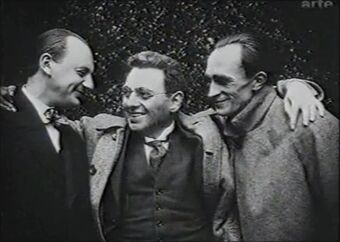
Schündler, Berber, and Veidt as Literature's arcana of Evil.
This unholy three appear in each of the stories, as different characters but sometimes within the same archetype, providing the actors with chances to flaunt their dramatic range. Veidt is predictably remarkable, but Schündler is a revelation. His Devil is a clear antecedent of the Lugosi vampire image, with his black cape, pasty face, and widow’s peak; his crazy husband character in the first story is the actual prototype of the aptly-named Cousin Eerie (!); and Peter Lorre clearly had his performance in mind when he essayed the same role on Roger Corman’s TALES OF TERROR almost 50 years later. The closing story, an original by Oswald told in verse, shows the chameleonic Veidt in a performance that serves as a dry run for his celebrated Gwynplaine/Lord Clancharlie in 1928's THE MAN WHO LAUGHS. In a surprising early gesture of auteurism, Oswald shares the screen briefly at the outset of the film in celebration of his partnership with the two principal actors.
|